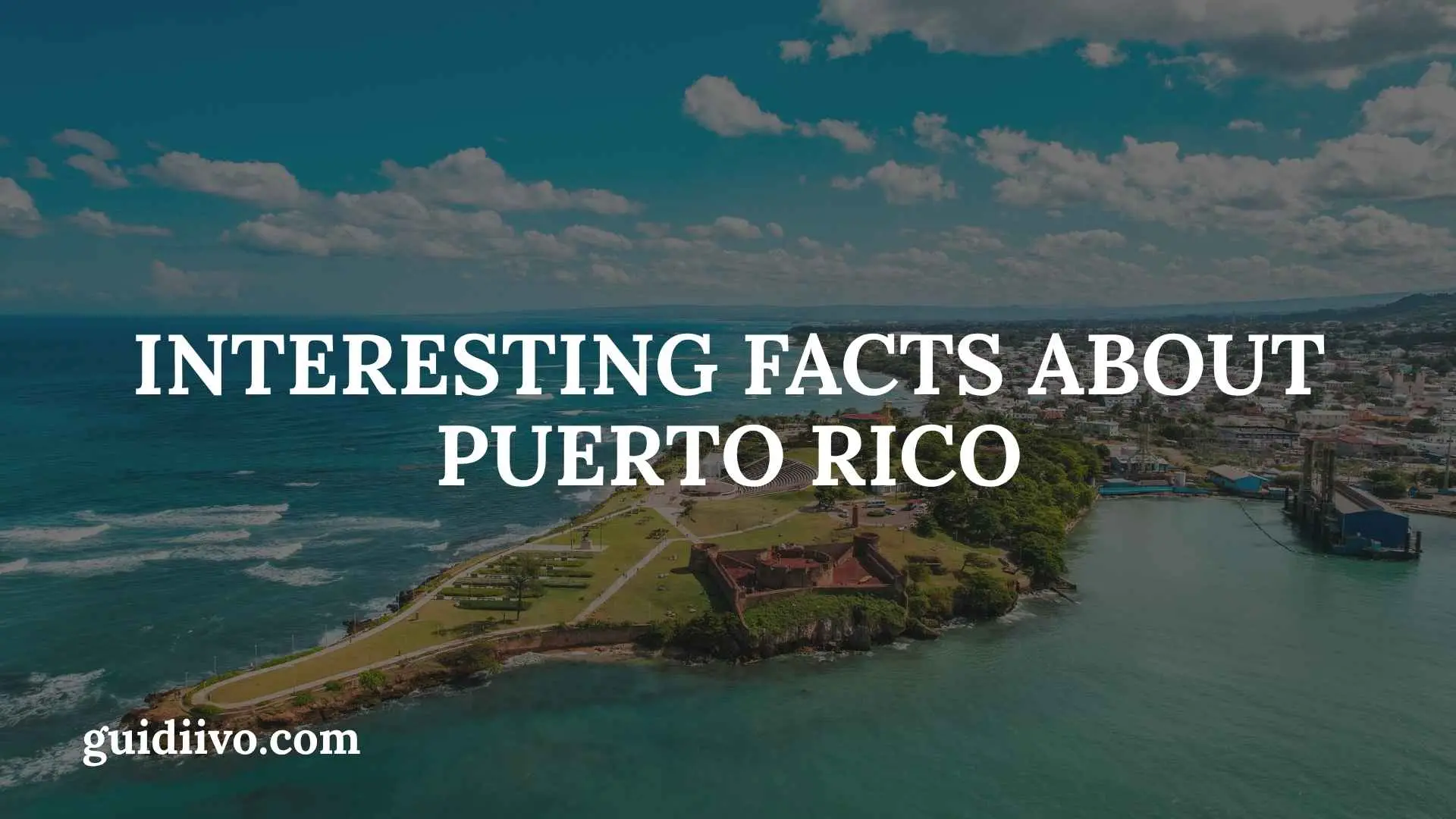
Puerto Rico is far more than a sunny Caribbean destination. This compact archipelago contains ancient Indigenous history, centuries-old fortresses, glowing bays, tropical forests, distinctive wildlife, influential music, and a culture that reaches far beyond its shores.
These interesting facts about Puerto Rico explore how geography, colonial history, migration, food, language, science, sports, and the arts shaped the island known as La Isla del Encanto, or “The Island of Enchantment.”
Quick Answer:Interesting Facts About Puerto Rico
Puerto Rico is a Caribbean archipelago and an unincorporated territory of the United States. Its residents are U.S. citizens, Spanish and English are official languages, and San Juan is its capital. The territory is famous for Old San Juan, El Yunque National Forest, bioluminescent bays, coquí frogs, salsa and reggaeton, beautiful beaches, and a rich blend of Taíno, African, Spanish, Caribbean, and American influences.
Puerto Rico Quick Facts
| Topic | Details |
| Official name | Commonwealth of Puerto Rico |
| Local Spanish name | Estado Libre Asociado de Puerto Rico |
| Location | Northeastern Caribbean Sea |
| Capital | San Juan |
| Political status | Unincorporated territory of the United States |
| Main island group | Greater Antilles |
| Population | About 3.2 million |
| Main languages | Spanish and English |
| Currency | U.S. dollar |
| Residents’ citizenship | U.S. citizenship |
| Highest point | Cerro de Punta |
| Largest city | San Juan |
| Municipalities | 78 |
| Best-known nickname | La Isla del Encanto |
| Famous natural feature | Bioluminescent bays |
| Famous historic area | Old San Juan |
| National forest | El Yunque National Forest |
| Fun fact | Puerto Rico has produced globally influential music, athletes, artists, scientists, and writers despite its relatively small size |
Puerto Rico’s estimated population was 3,203,295 on July 1, 2024, according to the U.S. Census Bureau.
Interesting Facts About Puerto Rico
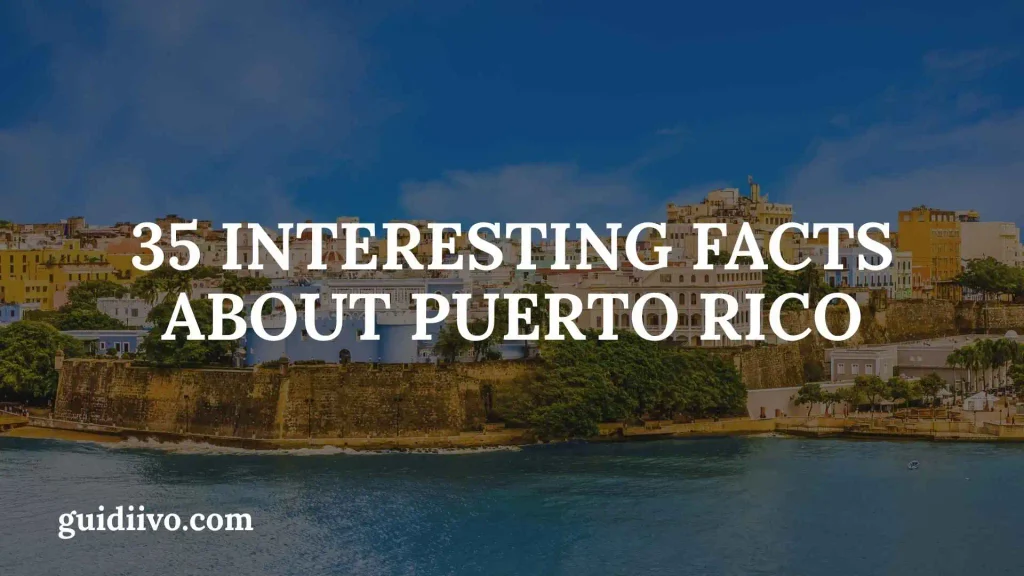
Fact 1: Puerto Rico Is an Archipelago, Not Just One Island
The fact: Puerto Rico includes the main island and many smaller islands, islets, and cays. Vieques, Culebra, and Mona are among the best-known smaller islands.
Why it matters: Thinking of Puerto Rico as a single island overlooks its ecological and geographic diversity. Each island has its own landscapes, communities, beaches, wildlife, and history.
Did you know? Vieques and Culebra are inhabited, while many smaller cays have no permanent population.
Additional context: The archipelago lies between the Dominican Republic and the U.S. Virgin Islands in the northeastern Caribbean.
Fact 2: Puerto Rico Is the Smallest Island of the Greater Antilles
The fact: The Greater Antilles include Cuba, Hispaniola, Jamaica, and Puerto Rico. Of the four principal islands, Puerto Rico is the smallest.
Why it matters: Its size makes its variety remarkable. Within a relatively short drive, travelers can move from dry coastal forests to misty mountains, beaches, caves, wetlands, and urban districts.
Did you know? Puerto Rico is roughly rectangular, although its coastline contains numerous bays, points, reefs, and coves.
Additional context: Its position at the eastern edge of the Greater Antilles made it strategically valuable during the colonial period.
Fact 3: Puerto Rico Is a U.S. Territory, Not a State
The fact: Puerto Rico is an unincorporated territory of the United States. It is neither an independent country nor one of the 50 states.
Why it matters: This status affects federal representation, taxation, voting rights, funding, trade, and political debate.
Did you know? People born in Puerto Rico are generally U.S. citizens, but residents living on the island cannot vote in the general election for U.S. president.
Additional context: Puerto Rico has its own constitution, elected governor, legislature, court system, and local government while remaining under U.S. federal authority.
Fact 4: Puerto Ricans Have Been U.S. Citizens Since 1917
The fact: The Jones-Shafroth Act granted U.S. citizenship to people born in Puerto Rico in 1917.
Why it matters: Citizenship allows Puerto Ricans to move freely between the island and the U.S. mainland without immigration paperwork.
Did you know? Puerto Ricans have served in every major U.S. military conflict since citizenship was extended.
Additional context: Citizenship did not resolve the island’s political-status debate. Statehood, independence, free association, and the current territorial arrangement remain subjects of public discussion.
Fact 5: Puerto Rico Has 78 Municipalities
The fact: Puerto Rico is divided into 78 municipalities rather than counties.
Why it matters: Each municipality has a mayor and local government. Municipal identities are strong, and residents often feel deep pride in their hometown traditions, festivals, foods, and sports teams.
Did you know? Municipalities are commonly divided into barrios, or wards.
Additional context: San Juan is the capital and largest urban center, while municipalities such as Ponce, Mayagüez, Caguas, Arecibo, and Bayamón serve as important regional hubs.
Fact 6: San Juan Is One of the Oldest European-Founded Cities in the Americas
The fact: San Juan traces its colonial settlement to the early 1500s, making it one of the oldest continuously inhabited European-established cities under U.S. jurisdiction.
Why it matters: Its streets preserve more than five centuries of recorded colonial history.
Did you know? The original settlement was established at Caparra before being moved to the islet now occupied by Old San Juan.
Additional context: The National Park Service notes that Juan Ponce de León arrived to establish a settlement in 1508, after Christopher Columbus reached the island in 1493.
Fact 7: Old San Juan Was Designed as a Fortified City
The fact: Spain surrounded San Juan with walls, gates, forts, bastions, and defensive positions to protect its harbor.
Why it matters: Puerto Rico stood along vital Atlantic shipping routes connecting Europe, the Caribbean, and Spain’s American colonies.
Did you know? Spain spent more than 250 years developing San Juan’s defensive system.
Additional context: The island’s fortifications helped establish Puerto Rico as the “front door” to Spain’s colonies in the Americas. Spain retained control of Puerto Rico for nearly four centuries.
Fact 8: El Morro Was Built to Guard San Juan Bay
The fact: Castillo San Felipe del Morro, commonly called El Morro, sits at the entrance to San Juan Bay.
Why it matters: Its location allowed defenders to watch approaching ships and protect one of the Caribbean’s most valuable natural harbors.
Did you know? The fortress contains ramps, tunnels, sentry boxes, batteries, barracks, and thick stone walls.
Additional context: El Morro forms part of the San Juan National Historic Site, which preserves structures that reflect centuries of military planning, engineering, and conflict.
Fact 9: San Juan’s Fortifications Are a UNESCO World Heritage Site
The fact: La Fortaleza and the San Juan National Historic Site are recognized as a UNESCO World Heritage Site.
Why it matters: The designation acknowledges their exceptional global value as examples of European military architecture adapted to a Caribbean setting.
Did you know? La Fortaleza still serves as the official residence of Puerto Rico’s governor.
Additional context: The protected complex includes major fortifications, walls, defensive works, and historic structures connected with the development of San Juan.
Fact 10: Taíno Culture Remains Part of Puerto Rican Identity
The fact: The Taíno were the principal Indigenous people living in Puerto Rico when Europeans arrived.
Why it matters: Although colonial violence, disease, forced labor, and displacement devastated Indigenous communities, Taíno influence did not simply disappear.
Did you know? Words such as hamaca, huracán, canoa, and barbacoa entered Spanish and later English through Indigenous Caribbean languages.
Additional context: Puerto Rican food, place names, art, archaeology, family histories, vocabulary, and cultural symbols continue to reflect Indigenous heritage.
Fact 11: The Taíno Called the Island Borikén
The fact: Puerto Rico’s Indigenous name is commonly written as Borikén or Borinquen.
Why it matters: The name remains a powerful expression of cultural belonging. Puerto Ricans are often called boricuas, a term derived from Borikén.
Did you know? “Boricua” can describe Puerto Ricans on the island and members of the wider diaspora.
Additional context: The word appears in poetry, political speech, music, business names, sports chants, murals, tattoos, and everyday conversation, connecting modern identity with precolonial history.
Fact 12: The Island Was Not Originally Called Puerto Rico
The fact: Columbus named the island San Juan Bautista. The important harbor settlement became known as Puerto Rico, meaning “rich port.”
Why it matters: Over time, the names effectively switched. The island became Puerto Rico, while the capital became San Juan.
Did you know? Historical names often changed as colonial settlements gained military or commercial importance.
Additional context: The name “Puerto Rico” reflects the economic expectations Europeans attached to the island, especially its location, harbor, agriculture, and access to regional trade routes.
Fact 13: Spanish and English Are Official Languages
The fact: Puerto Rico recognizes Spanish and English as official languages, but Spanish dominates most daily communication.
Why it matters: The island’s language patterns reveal its layered history under Spanish and U.S. rule.
Did you know? Many Puerto Ricans shift naturally between Spanish and English, especially in education, business, tourism, media, and diaspora communities.
Additional context: Puerto Rican Spanish has its own pronunciation, rhythm, expressions, African and Taíno influences, and Caribbean vocabulary. Official government fact sheets list both Spanish and English as the territory’s languages.
Fact 14: Puerto Rico Uses the U.S. Dollar
The fact: The official currency is the U.S. dollar.
Why it matters: Visitors from the United States do not need to exchange money, and Puerto Rico participates in the U.S. banking and monetary system.
Did you know? Puerto Ricans sometimes informally call a dollar a peso, even though the legal currency is the dollar.
Additional context: That everyday usage reflects historical memory. The Puerto Rican peso circulated before the island’s monetary system was integrated with that of the United States.
Fact 15: U.S. Citizens Do Not Need a Passport to Travel There From the Mainland
The fact: Puerto Rico is part of U.S. territory, so U.S. citizens traveling directly from the mainland generally do not need a passport.
Why it matters: The island combines Caribbean geography with domestic U.S. travel procedures.
Did you know? Travelers still need identification that meets airline and federal security requirements.
Additional context: Passport rules differ for non-U.S. citizens and for itineraries that pass through foreign countries. Travelers should always confirm current identification and entry requirements before departure.
Fact 16: El Yunque Is the Only Tropical Rainforest in the U.S. National Forest System
The fact: El Yunque National Forest is the only tropical rainforest managed within the U.S. National Forest System.
Why it matters: The forest protects watersheds, wildlife habitats, mountain ecosystems, and recreation areas in northeastern Puerto Rico.
Did you know? El Yunque receives heavy rainfall, but precipitation varies greatly by elevation and location.
Additional context: Streams, waterfalls, palms, ferns, orchids, cloud-covered peaks, and dense vegetation make the forest one of Puerto Rico’s most recognizable natural landscapes.
Fact 17: Puerto Rico Has Several Distinct Ecological Zones
The fact: Puerto Rico contains rainforests, dry forests, mangroves, wetlands, coral reefs, seagrass beds, mountain forests, caves, rivers, and coastal lagoons.
Why it matters: Biodiversity depends not only on land area but also on the number of habitats packed into that space.
Did you know? The island’s northern and eastern regions are generally wetter than much of the southern coast.
Additional context: Mountain ranges force moist air upward, encouraging rain on windward slopes and creating drier conditions in some leeward areas.
Fact 18: Guánica Contains a Famous Tropical Dry Forest
The fact: The Guánica Dry Forest in southwestern Puerto Rico protects a landscape very different from El Yunque.
Why it matters: Tropical forests are not always wet and lush. Dry forests support plants and animals adapted to intense sun, seasonal rainfall, thin soils, and water scarcity.
Did you know? Many trees in dry forests lose leaves during dry periods to conserve moisture.
Additional context: Seeing El Yunque and Guánica helps visitors understand how dramatically Puerto Rico’s climate and vegetation can change across a relatively small territory.
Fact 19: Puerto Rico Has Three Famous Bioluminescent Bays
The fact: Puerto Rico is widely known for bioluminescent waters at Mosquito Bay in Vieques, Laguna Grande near Fajardo, and La Parguera in Lajas.
Why it matters: These ecosystems offer rare opportunities to observe living organisms producing visible light.
Did you know? The glow appears when microscopic dinoflagellates are disturbed by paddles, boats, fish, or moving water.
Additional context: Water quality, mangroves, circulation, darkness, temperature, salinity, and nutrient conditions all affect the organisms that create the display.
Fact 20: Mosquito Bay Is Famous for Exceptional Brightness
The fact: Puerto Mosquito on Vieques is widely described as the brightest bioluminescent bay on Earth.
Why it matters: Its sheltered shape and surrounding ecosystems help support dense concentrations of light-producing dinoflagellates.
Did you know? The responsible species is commonly identified as Pyrodinium bahamense.
Additional context: NOAA describes the Guinness-recognized bay as a globally important natural wonder and has supported restoration work involving mangroves, seagrass, corals, water quality, and surrounding habitats.
Fact 21: The Coquí Is Tiny but Exceptionally Loud
The fact: The coquí is a small tree frog famous for the two-part call that sounds like “ko-kee.”
Why it matters: Its call forms part of Puerto Rico’s nighttime soundscape and has become a beloved symbol of home.
Did you know? Different coquí species occupy different elevations and habitats.
Additional context: The frog’s cultural importance goes beyond biology. Images of the coquí appear on crafts, clothing, jewelry, logos, souvenirs, poems, and murals, especially as a symbol of Puerto Rican identity and resilience.
Fact 22: Puerto Rico Has No Large Native Land Mammals
The fact: Before human settlement, Puerto Rico did not have the variety of large native terrestrial mammals found on continents.
Why it matters: Islands often develop unusual ecosystems because isolation limits which animals can arrive and survive.
Did you know? Bats are Puerto Rico’s principal native land mammals.
Additional context: Many familiar mammals now found on the island were introduced by people. Introduced species can compete with native wildlife, damage crops, spread disease, or alter fragile habitats.
Fact 23: The Puerto Rican Parrot Is One of the World’s Rarest Parrots
The fact: The Puerto Rican parrot, or iguaca, is the only parrot native to Puerto Rico.
Why it matters: Habitat destruction, hunting, hurricanes, predators, and a severely reduced population pushed the species close to extinction.
Did you know? Conservation programs use captive breeding, habitat management, nest monitoring, predator control, and carefully managed releases.
Additional context: The parrot’s recovery shows how long-term cooperation among scientists, land managers, communities, and government agencies can prevent the loss of an irreplaceable species.
Fact 24: Puerto Rico Sits Near the Boundary of Tectonic Plates
The fact: Puerto Rico lies near the complex boundary between the Caribbean Plate and the North American Plate.
Why it matters: This setting creates earthquake risk and helped shape the region’s mountains, trenches, faults, and seafloor.
Did you know? Earthquakes may occur offshore or beneath the island, and some are strong enough to damage buildings and infrastructure.
Additional context: The earthquake sequence that began in southern Puerto Rico in late 2019 highlighted the need for resilient construction, emergency planning, public education, and reliable communication systems.
Fact 25: The Puerto Rico Trench Is One of the Atlantic’s Deepest Places
The fact: North of Puerto Rico lies the Puerto Rico Trench, the deepest part of the Atlantic Ocean.
Why it matters: The trench marks an active tectonic region where large sections of Earth’s crust interact.
Did you know? The deepest point is known as Milwaukee Deep.
Additional context: Scientists study the trench to understand earthquakes, plate movement, deep-sea ecosystems, underwater landslides, and tsunami hazards. Its presence also shows that Puerto Rico’s dramatic geography continues far below the ocean surface.
Fact 26: Hurricanes Have Shaped Puerto Rican Life
The fact: Puerto Rico lies in the Atlantic hurricane region and has experienced many destructive tropical cyclones.
Why it matters: Hurricanes influence architecture, agriculture, emergency planning, power systems, migration, public health, forests, and household preparedness.
Did you know? Hurricane Maria made landfall in September 2017 and caused an island-wide humanitarian and infrastructure crisis.
Additional context: Recovery involves more than rebuilding damaged structures. It also requires stronger energy systems, protected water supplies, updated building practices, ecosystem restoration, reliable communications, and support for vulnerable communities.
Fact 27: Puerto Rican Food Reflects Several Cultural Traditions
The fact: Puerto Rican cuisine combines Indigenous, Spanish, African, Caribbean, and later international influences.
Why it matters: Food preserves history in ways that official documents often cannot. Ingredients and cooking methods reveal trade, migration, adaptation, plantation economies, family life, and local agriculture.
Did you know? Plantains, rice, beans, root vegetables, pork, seafood, tropical fruits, garlic, peppers, and herbs appear in many traditional dishes.
Additional context: Recipes vary by family, municipality, season, celebration, and access to ingredients.
Fact 28: Mofongo Is Made by Mashing Fried Plantains
The fact: Mofongo is usually prepared from fried green plantains mashed with garlic, salt, oil, and crisp pork skin or other seasonings.
Why it matters: The dish reflects African culinary techniques combined with Caribbean ingredients and Puerto Rican creativity.
Did you know? It may be served with broth or filled with chicken, shrimp, steak, vegetables, or seafood.
Additional context: Mofongo is not simply a tourist dish. Its texture, preparation, and flavor connect it with wider histories of plantain cultivation and African influence in Caribbean cooking.
Fact 29: Puerto Rico Helped Shape Salsa
The fact: Puerto Rican musicians played a central role in the development and global spread of salsa, especially through exchanges between Puerto Rico, Cuba, New York, and other Caribbean communities.
Why it matters: Salsa is not just one rhythm. It brings together musical forms, instruments, dance traditions, migration stories, and urban experiences.
Did you know? Many influential salsa performers came from Puerto Rico or New York’s Puerto Rican communities.
Additional context: The music became a powerful expression of Caribbean and Latino identity during the twentieth century.
Fact 30: Reggaeton Has Deep Puerto Rican Roots
The fact: Puerto Rico became one of reggaeton’s most important creative centers during the 1990s and early 2000s.
Why it matters: The genre mixed influences from Jamaican dancehall, Panamanian reggae en español, hip-hop, electronic production, and Puerto Rican urban life.
Did you know? Early reggaeton circulated through clubs, mixtapes, informal recordings, and underground scenes before becoming a global commercial force.
Additional context: Puerto Rican performers and producers helped turn the genre into one of the world’s dominant forms of popular music.
Fact 31: Baseball Is One of Puerto Rico’s Most Beloved Sports
The fact: Baseball has a long history in Puerto Rico and remains closely tied to local identity.
Why it matters: The island has produced many Major League Baseball stars, Hall of Fame players, coaches, broadcasters, and international competitors.
Did you know? Roberto Clemente is celebrated not only for his athletic ability but also for humanitarian work and pride in his Puerto Rican heritage.
Additional context: Winter league baseball has provided generations of players with competitive experience while giving communities strong local teams to support.
Fact 32: Puerto Rico Competes Under Its Own Flag in the Olympics
The fact: Although Puerto Ricans are U.S. citizens, Puerto Rico has its own National Olympic Committee and sends its own team to the Olympic Games.
Why it matters: International sports provide a visible expression of Puerto Rico’s distinct cultural and civic identity.
Did you know? Puerto Rican athletes also compete separately in events such as the Pan American Games and international basketball tournaments.
Additional context: Some athletes with Puerto Rican heritage may be eligible to represent either Puerto Rico or the United States, depending on governing rules.
Fact 33: The Puerto Rican Flag Once Had Revolutionary Meaning
The fact: Puerto Rico’s flag was created in the late nineteenth century by independence-minded Puerto Rican activists.
Why it matters: Its design carried political meaning before becoming the territory’s official flag in 1952.
Did you know? Its layout resembles the Cuban flag with the colors reversed, reflecting historical solidarity between independence movements.
Additional context: Today the flag appears across political viewpoints and has become one of the strongest shared symbols of Puerto Rican culture, identity, sports, music, and diaspora pride.
Fact 34: Puerto Rico Has a Large and Influential Diaspora
The fact: More people of Puerto Rican origin live in the U.S. states than on the island itself.
Why it matters: Migration has created cultural bridges that shape politics, music, literature, food, language, business, and family life.
Did you know? New York became a major center of Puerto Rican culture during the twentieth century, but large communities now live in Florida, Pennsylvania, New Jersey, Connecticut, Massachusetts, and elsewhere.
Additional context: Circular migration means many families maintain close ties in both directions.
Fact 35: Puerto Rico’s Population Has Declined in Recent Decades
The fact: Puerto Rico’s population fell significantly between the 2010 and 2020 censuses.
Why it matters: Population loss affects schools, housing, healthcare, employment, tax revenue, infrastructure, and care for an aging population.
Did you know? The 2020 census counted 3,285,874 residents, an 11.8% decline from 2010.
Additional context: The decline reflects several connected forces, including low birth rates, economic pressures, migration, natural disasters, and changing household patterns.
Puerto Rico Historical Timeline
| Date | Milestone |
| Before 1493 | Indigenous communities, including the Taíno, inhabit Borikén |
| 1493 | Christopher Columbus reaches the island during his second voyage |
| 1508 | Juan Ponce de León establishes the settlement at Caparra |
| 1521 | The main settlement moves to present-day San Juan |
| 1500s–1700s | Spain expands San Juan’s defensive fortifications |
| 1868 | The Grito de Lares uprising challenges Spanish colonial rule |
| 1873 | Slavery is abolished in Puerto Rico |
| 1897 | Spain grants Puerto Rico a measure of autonomous government |
| 1898 | The United States takes control following the Spanish-American War |
| 1917 | The Jones-Shafroth Act grants U.S. citizenship |
| 1947 | Puerto Ricans gain the right to elect their governor |
| 1948 | Luis Muñoz Marín becomes the first popularly elected governor |
| 1952 | Puerto Rico adopts its constitution and commonwealth government |
| 2017 | Hurricane Maria causes widespread destruction |
| 2019–2020 | A major earthquake sequence affects southern Puerto Rico |
| Present | Political status, economic development, resilience, migration, and cultural identity remain central public issues |
Puerto Rico’s recorded colonial history spans more than 500 years, with many early records preserved in Spanish archives.
Puerto Rico Statistics
| Statistic | Figure |
| Estimated population, July 2024 | 3,203,295 |
| 2020 census population | 3,285,874 |
| Population decline from 2010 to 2020 | 11.8% |
| Number of municipalities | 78 |
| Main island area | About 3,400 square miles |
| Highest elevation | About 4,390 feet |
| Official languages | 2 |
| Major inhabited offshore islands | Vieques and Culebra |
| Major bioluminescent locations | 3 |
| Approximate period of Spanish control | Nearly 400 years |
Population figures come from the U.S. Census Bureau’s Puerto Rico datasets and QuickFacts resources.
Puerto Rico Myth vs. Fact
| Myth | Fact |
| Puerto Rico is a foreign country | It is an unincorporated territory of the United States |
| Puerto Ricans are not U.S. citizens | People born in Puerto Rico are generally U.S. citizens |
| Puerto Rico is one island only | It is an archipelago with many islands, cays, and islets |
| Everyone mainly speaks English | Spanish is the dominant language in daily life |
| Residents vote for U.S. president | Island residents do not vote in the presidential general election |
| Puerto Rico is completely tropical rainforest | It contains rainforests, dry forests, mountains, wetlands, caves, and coastal ecosystems |
| Bioluminescent bays glow because of chemicals | Living microorganisms produce the light |
| Salsa began in one country at one moment | It developed through exchanges among several Caribbean and Latino communities |
| Puerto Rican identity is purely Spanish | It reflects Taíno, African, Spanish, Caribbean, American, and other influences |
| Traveling from the U.S. mainland always requires a passport | U.S. citizens generally do not need one for direct domestic travel |
Common Misconceptions About Puerto Rico
Puerto Rico and Costa Rica Are Different Places
The names sound somewhat similar, but Puerto Rico is a Caribbean archipelago and U.S. territory. Costa Rica is an independent country in Central America. They have different political systems, histories, geography, cultures, and national identities.
“Commonwealth” Does Not Mean Puerto Rico Is a State
Puerto Rico uses the English designation “Commonwealth,” but that word does not give it the constitutional status of a U.S. state. Its relationship with the federal government remains territorial.
Puerto Rican Culture Is Not Identical to Mainland U.S. Culture
Shared citizenship and institutions do not erase Puerto Rico’s distinct language, traditions, history, music, food, legal practices, family networks, and Caribbean identity.
Tourism Does Not Show the Whole Island
Resorts and historic districts represent only part of Puerto Rican life. The island also contains farming towns, mountain communities, industrial areas, universities, protected ecosystems, working-class neighborhoods, fishing villages, research centers, and culturally distinct municipalities.
Why Puerto Rico Matters Today
Puerto Rico matters because it sits at the meeting point of several major issues: Caribbean history, U.S. constitutional law, climate vulnerability, migration, biodiversity, renewable energy, language, cultural identity, and disaster resilience.
Its forests, reefs, wetlands, and bioluminescent bays have scientific value. Its artists and musicians shape global culture. Its political status raises important questions about citizenship and democratic representation. Its experience with hurricanes and earthquakes offers lessons about infrastructure, public health, community networks, and climate adaptation.
Puerto Rico also demonstrates how a place can remain culturally distinctive while maintaining deep social, economic, and political connections with a much larger nation.
Related Places and Discoveries
Puerto Rico is closely connected with the wider Antilles, including Cuba, Hispaniola, Jamaica, the Virgin Islands, and the Lesser Antilles. These islands share geological processes, hurricane exposure, colonial histories, trade networks, migration patterns, and cultural exchanges.
Related topics include Taíno archaeology, Caribbean coral reefs, Atlantic hurricanes, plate tectonics, bioluminescence, Spanish colonial fortifications, Afro-Caribbean music, tropical ecology, Puerto Rican migration, and the development of Latino communities in the United States.
NOAA-supported work around Vieques also shows how mangroves, seagrass, corals, coastal water quality, and bioluminescent organisms form one connected ecological system.
Expert Insights: Understanding Puerto Rico Beyond the Facts
Puerto Rico is best understood through relationships rather than isolated details.
Its geography explains why Spain fortified San Juan. Its colonial history helps explain the island’s language and architecture. African and Indigenous histories remain visible in food, music, vocabulary, spirituality, and art. Migration explains why Puerto Rican culture is equally important in places such as New York, Orlando, Philadelphia, and Chicago.
Likewise, environmental issues cannot be separated from economic and social conditions. A hurricane may damage a forest, but it can also interrupt healthcare, education, transportation, tourism, employment, and electricity. Protecting Puerto Rico therefore requires scientific research, strong infrastructure, local knowledge, responsible tourism, effective government, and community participation.
Frequently Asked Questions About Puerto Rico
Is Puerto Rico a country or part of the United States?
Puerto Rico is an unincorporated territory of the United States. It has its own local constitution and elected government, but the U.S. Congress retains broad authority over the territory. It is not one of the 50 states and is not an independent sovereign country.
Are people born in Puerto Rico U.S. citizens?
Yes. People born in Puerto Rico are generally U.S. citizens by federal law. They can live, work, study, and travel within the United States without immigration restrictions. However, residents of the island do not have the same federal voting representation as residents of a state.
What language do people speak in Puerto Rico?
Spanish is the primary language used in homes, communities, entertainment, and most everyday situations. English is also an official language and is common in tourism, government, education, and business. Levels of bilingual ability vary by person, age, profession, education, and location.
What is Puerto Rico best known for?
Puerto Rico is known for Old San Juan, El Morro, El Yunque, bioluminescent bays, beaches, coquí frogs, salsa, reggaeton, baseball, rum, coffee, mofongo, and its strong cultural identity. It is also recognized for its Taíno, African, Spanish, Caribbean, and American heritage.
Do U.S. citizens need a passport to visit Puerto Rico?
U.S. citizens traveling directly between Puerto Rico and the U.S. mainland generally do not need a passport because the journey is treated as domestic travel. They still need acceptable identification. Requirements may differ for noncitizens or travelers whose routes include another country.
What is Puerto Rico’s capital?
San Juan is Puerto Rico’s capital and largest urban center. The city is known for its major harbor, colonial fortifications, government institutions, cultural attractions, beaches, universities, businesses, and metropolitan neighborhoods. Old San Juan forms the historic core but is only one part of the larger city.
Why is Puerto Rico called Borinquen?
Borinquen is a Spanish-influenced form of Borikén, the Indigenous Taíno name associated with the island. It remains widely used in songs, poems, speeches, place names, and cultural expressions. The related term boricua is a popular word for a Puerto Rican person.
How many islands are part of Puerto Rico?
Puerto Rico includes the main island and numerous smaller islands, cays, and islets. Vieques and Culebra are the best-known inhabited offshore islands. Mona is another major island but has no large permanent civilian population. Exact totals vary depending on how small coastal formations are classified.
What makes Puerto Rico’s bioluminescent bays glow?
Microscopic organisms called dinoflagellates produce flashes of light through a biochemical reaction. When water movement disturbs them, they emit a blue-green glow. The intensity depends on organism concentration, water quality, moonlight, weather, tides, pollution, and the health of nearby mangroves and marine habitats.
What is the best-known symbol of Puerto Rico?
The Puerto Rican flag and the coquí frog are among the island’s best-known symbols. The flag represents identity, history, and collective pride, while the coquí represents the island’s natural environment and emotional sense of home. Taíno symbols and the phrase Boricua are also culturally important.
Key Takeaways
- Puerto Rico is a Caribbean archipelago and an unincorporated U.S. territory.
- Puerto Ricans are U.S. citizens, but island residents cannot vote for president in the general election.
- The territory includes 78 municipalities and several smaller islands.
- San Juan contains more than 500 years of colonial history.
- Spanish fortifications protected one of the Caribbean’s most strategic harbors.
- Taíno, African, Spanish, Caribbean, and American influences shape Puerto Rican culture.
- El Yunque is the only tropical rainforest in the U.S. National Forest System.
- Puerto Rico has three celebrated bioluminescent locations.
- The coquí and Puerto Rican parrot are important native animals.
- Salsa, reggaeton, baseball, food, literature, and migration have expanded Puerto Rico’s global influence.
- Hurricanes, earthquakes, population decline, infrastructure, and political status remain major modern issues.
- Puerto Rico’s small size hides extraordinary cultural, historical, geological, and ecological diversity.
Conclusion
The most interesting facts about Puerto Rico reveal a place shaped by far more than beaches and tropical weather. Puerto Rico is an archipelago of ancient Indigenous roots, fortified cities, dramatic ecosystems, powerful music, complex political relationships, and communities that have repeatedly demonstrated creativity and resilience.
Its influence reaches across the Caribbean, the United States, Latin America, and the wider world. To understand Puerto Rico is to explore how geography, history, culture, science, and identity can come together within one remarkable Island of Enchantment.

I am Theodore Blake, a writer driven by curiosity and a lifelong love of discovery. I enjoy exploring surprising facts about animals, science, history, and the natural world. Through my writing, I aim to make knowledge simple, enjoyable, and memorable while inspiring readers to see familiar subjects from new perspectives.
Books
1. The Curious World: Extraordinary Facts Explained
A fascinating collection of unusual facts about nature, science, history, and everyday life, written to entertain curious readers.
2. Hidden Wonders: Stories Behind Amazing Facts
This book explores surprising discoveries and little-known stories that reveal how extraordinary our world truly is.