
Dogs have lived beside humans for thousands of years, yet many of their abilities remain surprising. They can detect tiny scent changes, follow human gestures, communicate through body movements, dream during sleep, and learn routines with impressive accuracy.
These interesting facts about dogs explore how canine senses, anatomy, behavior, history, intelligence, and emotional lives work. You will also discover why dogs sniff everything, how domestication shaped their social skills, why breed does not fully determine personality, and what modern science has learned about our closest animal companions.
Quick Answer:Interesting Facts About Dogs
Dogs are domesticated canines known for their powerful sense of smell, strong social intelligence, physical diversity, and close relationship with people. They descended from ancient wolf populations and became the first animals domesticated by humans. Today, hundreds of breeds perform roles ranging from companionship and herding to search-and-rescue, medical detection, conservation, and therapy work.
Quick Facts About Dogs
| Topic | Information |
| Common name | Domestic dog |
| Scientific name | Canis familiaris or Canis lupus familiaris |
| Animal family | Canidae |
| Wild ancestry | Ancient wolf populations |
| Domestication | At least 14,000 years ago, possibly much earlier |
| Recognized breeds | 364 recognized by the Fédération Cynologique Internationale |
| Typical lifespan | Often 10 to 13 years, depending on size, breed, health, and care |
| Diet | Omnivorous, with nutritional needs that differ from humans |
| Main senses | Smell, hearing, vision, touch, and taste |
| Social structure | Highly social and adaptable |
| Fun fact | Dogs can learn to follow human pointing gestures at a young age |
Dogs were the first known animal species domesticated by humans, although researchers continue to debate exactly when and where the process began.
1. Dogs Were Domesticated Before Agriculture

The Fact
Dogs were living with humans before people developed large farming settlements. Archaeological evidence confirms domesticated dogs existed more than 14,000 years ago, while genetic studies suggest the relationship may have begun thousands of years earlier.
Why It Matters
This means dogs did not initially join human communities to guard farms. Their early partnership probably grew from hunting, scavenging, protection, warmth, and mutual tolerance.
Did You Know?
Dogs are widely considered humanity’s first domesticated animal.
2. Modern Dogs Did Not Simply Descend From Today’s Wolves
The Fact
Dogs and modern gray wolves share an ancient common ancestor, but dogs are not merely tame versions of the wolves alive today. Both lineages changed over thousands of years after separating from ancestral wolf populations.
Why It Matters
Comparing a pet dog directly with a modern wolf can create misleading conclusions about behavior, diet, and social structure.
Did You Know?
Domestication changed canine appearance, development, stress responses, and willingness to cooperate with humans.
3. Every Dog Belongs to the Same Species
The Fact
A Chihuahua and a Great Dane may look like completely different animals, but both belong to the domestic dog species. Selective breeding created dramatic differences in height, body shape, coat, skull structure, and behavior.
Why It Matters
Few mammal species show as much visible variation as dogs.
Did You Know?
The size difference between the smallest and largest dogs is far greater than the normal variation seen within most wild mammal species.
4. Hundreds of Dog Breeds Exist Worldwide
The Fact
Breed totals vary because kennel organizations follow different recognition systems. As of 2026, the Fédération Cynologique Internationale recognizes 364 breeds, while the American Kennel Club recognizes fewer.
Why It Matters
A breed may be officially recognized in one country but not in another. Recognition also requires documented ancestry, stable characteristics, and an accepted breed standard.
Did You Know?
Many additional regional landraces and developing breeds exist without full international recognition.
5. A Dog’s Nose Is an Advanced Biological Sensor
The Fact
Dogs possess a far more sensitive olfactory system than humans. Estimates commonly suggest their sense of smell may be 10,000 to 100,000 times more acute, although ability varies by breed, individual, odor, and testing method.
Why It Matters
Dogs can locate missing people, detect explosives, find wildlife, identify human remains, and follow scent trails.
Did You Know?
Scent hounds such as Bloodhounds and Beagles are especially specialized for odor tracking.
6. Dogs Smell Separately With Each Nostril
The Fact
A dog’s nostrils can sample odor information from slightly different directions. This helps the brain compare scent intensity and determine where an odor originated.
Why It Matters
The process works somewhat like using two ears to locate a sound. By moving its head and nose, a dog can follow increasingly concentrated scent molecules.
Did You Know?
Those rapid sniffing movements are part of an active information-gathering system, not random behavior.
7. Exhaled Air Leaves Through Openings Beside the Nose
The Fact
When dogs sniff, inhaled air enters through the front of the nostrils while exhaled air is directed through slits along the sides.
Why It Matters
This airflow pattern reduces disturbance to the scent directly ahead and can help draw new odor molecules toward the nose.
Did You Know?
A wet nose may also help trap scent particles, although nose moisture naturally changes during the day.
8. Dogs Can Detect Human Stress Odor
The Fact
Controlled research has shown that dogs can distinguish samples collected from people before and after a stressful task. The samples included breath and sweat, suggesting human stress creates detectable chemical changes.
Why It Matters
Dogs may respond to emotional states through scent as well as facial expressions, posture, and voice.
Did You Know?
A dog does not need to understand the cause of stress to notice that a person’s body chemistry has changed.
9. Sniffing Is Mentally Enriching
The Fact
Allowing dogs time to investigate smells gives them information about other animals, food, territory, weather, and recent activity.
Why It Matters
A walk focused only on distance may exercise the body but offer less mental stimulation. Safe sniffing opportunities can build confidence and reduce boredom.
Did You Know?
For a dog, slowly examining a tree or patch of grass can be similar to reading a detailed neighborhood bulletin.
10. Nose Prints Can Show Individual Patterns
The Fact
The lines and grooves on a dog’s nose form a distinctive pattern. They are often compared with human fingerprints because the arrangement differs among individuals.
Why It Matters
Some identification projects have experimented with nose-print records, although microchips and tags remain more practical ways to reunite lost dogs with owners.
Did You Know?
A unique pattern does not mean taking a nose print is a standard legal identification method everywhere.
11. Dogs Hear Frequencies Humans Cannot
The Fact
Dogs can hear higher-frequency sounds than humans. Their movable outer ears also help gather sound and locate its direction.
Why It Matters
A dog may react to electronics, small animals, distant movement, or high-pitched sounds that people cannot hear.
Did You Know?
Hearing ability varies with age, ear shape, genetics, illness, and previous exposure to loud noise.
12. Floppy Ears Can Affect Sound Collection
The Fact
Ear shape changes how sound reaches the ear canal. Upright ears can rotate and capture sound efficiently, while heavy, hanging ears partly cover the opening.
Why It Matters
This does not mean floppy-eared dogs cannot hear well. It simply shows how selective breeding altered anatomy originally designed for survival and communication.
Did You Know?
Hanging ears may also reduce ventilation, which can contribute to ear problems in some dogs.
13. Dogs Are Not Completely Color-Blind
The Fact
Dogs do see color, but their color range differs from ours. Their vision is strongest in shades related to blue and yellow, while reds and greens may appear duller or more similar.
Why It Matters
A bright red toy can be difficult to spot on green grass even though both colors look highly contrasting to a person.
Did You Know?
Blue or yellow training equipment may be easier for many dogs to see.
14. Motion May Be More Noticeable Than Fine Detail
The Fact
Dogs generally do not see fine detail as sharply as humans, but they can be highly sensitive to movement, especially in dim conditions.
Why It Matters
Their visual system developed for detecting meaningful changes in the environment rather than reading small symbols or examining stationary objects closely.
Did You Know?
A dog may notice a moving animal at a distance while failing to recognize a motionless object nearby.
15. Whiskers Are Sensitive Touch Tools
The Fact
The stiff hairs around a dog’s muzzle, eyes, and jaw are deeply rooted and connected to sensitive nerves. They detect light contact and changes in nearby air movement.
Why It Matters
Whiskers help dogs understand close surroundings, especially when lighting is poor or an object is near the face.
Did You Know?
Cutting whiskers does not cause the same pain as cutting skin, but it removes useful sensory input.
16. Dogs Cool Themselves Mainly by Panting
The Fact
Dogs do not rely on full-body sweating the way humans do. Panting moves air across moist tissues in the mouth and respiratory tract, helping heat leave the body through evaporation.
Why It Matters
Hot, humid conditions can reduce cooling efficiency and increase the risk of heatstroke.
Did You Know?
Dogs have sweat glands in areas including their paw pads, but these glands cannot cool the entire body effectively.
17. Paw Pads Are Built for Protection, Not Invincibility
The Fact
A dog’s paw pads cushion movement, provide traction, and protect deeper tissues. However, they can still burn on hot pavement, crack in dry conditions, or suffer cuts from sharp surfaces.
Why It Matters
Owners should check walking surfaces and inspect paws regularly.
Did You Know?
If pavement is uncomfortable for your hand after several seconds, it may also be unsafe for a dog’s feet.
18. Dogs Dream During Sleep
The Fact
Dogs pass through different sleep stages, including periods associated with rapid eye movement. During these stages, they may twitch, move their paws, change breathing patterns, or make quiet sounds.
Why It Matters
These movements are usually normal signs of sleep rather than evidence of distress.
Did You Know?
Puppies and older dogs may appear to dream more frequently than healthy middle-aged adults.
19. Puppies Need Large Amounts of Sleep
The Fact
Young puppies often sleep for much of the day because their bodies and nervous systems are developing rapidly.
Why It Matters
Overtired puppies may become mouthy, restless, noisy, or unable to focus. Those behaviors can be mistaken for deliberate disobedience.
Did You Know?
A predictable pattern of activity, bathroom breaks, food, and rest can support learning.
20. Dogs Understand Human Pointing Surprisingly Well
The Fact
Many dogs can use a human pointing gesture to locate food or an object. Research comparing dog puppies and wolf puppies suggests domestication strengthened dogs’ attraction to and understanding of human social signals.
Why It Matters
This ability supports cooperation in homes, farms, hunting settings, and working partnerships.
Did You Know?
Dogs can show these skills early in life, even before extensive formal training.
21. Dogs Watch Faces and Bodies Together
The Fact
Dogs do not interpret communication from a single signal. They combine facial expression, body position, movement, gaze, voice, past experience, and scent.
Why It Matters
A cheerful voice paired with tense posture may send conflicting information. Dogs often respond to the whole situation rather than the words alone.
Did You Know?
Human communication becomes clearer when gestures, tone, timing, and rewards are consistent.
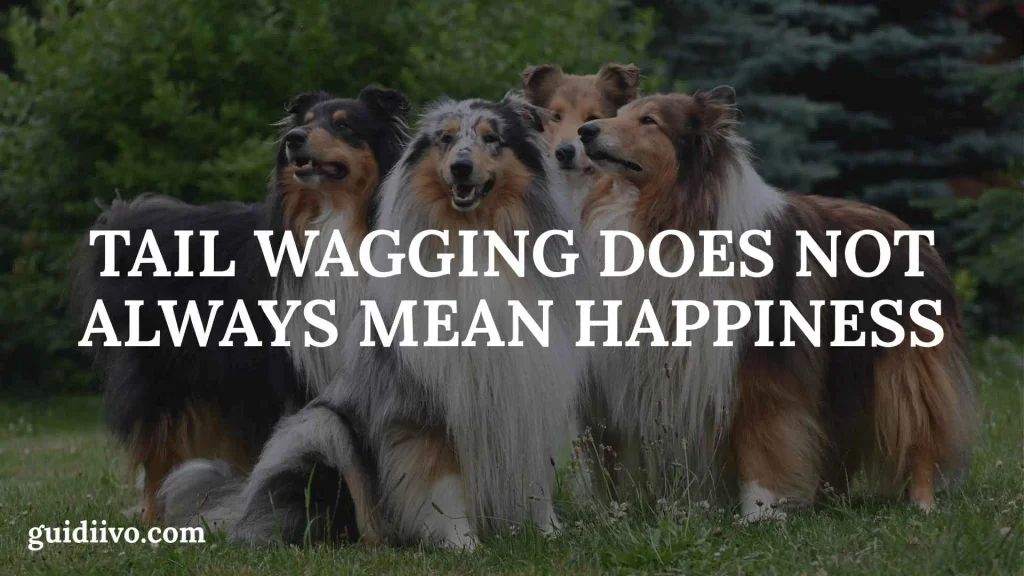
22. Tail Wagging Does Not Always Mean Happiness
The Fact
A wagging tail indicates emotional arousal, but that arousal may involve excitement, uncertainty, tension, friendliness, or frustration.
Why It Matters
The tail’s height, speed, stiffness, direction, and movement must be read alongside the dog’s face and body.
Did You Know?
A loose, sweeping wag with a relaxed body usually communicates something different from a high, rigid, rapidly vibrating tail.
23. Growling Is Valuable Communication
The Fact
A growl often warns that a dog feels threatened, uncomfortable, protective, frightened, or overwhelmed.
Why It Matters
Punishing the growl may suppress the warning without removing the underlying emotion. A dog that stops warning can become harder to read.
Did You Know?
The safer response is to create distance, identify the trigger, and seek qualified behavioral help when needed.
24. Yawning Can Be a Stress Signal
The Fact
Dogs yawn when tired, but they may also yawn during uncertainty, social pressure, excitement, or conflict.
Why It Matters
Context changes the meaning. A yawn at bedtime differs from repeated yawning during a forced interaction.
Did You Know?
Lip licking, turning away, freezing, lowering the body, and showing the whites of the eyes can also indicate discomfort.
25. Breed Does Not Fully Predict Personality
The Fact
Breed ancestry can influence tendencies, but it does not determine every individual dog’s behavior. A major genomic study found that breed explained only about 9 percent of behavioral variation among individual dogs.
Why It Matters
Training, socialization, health, age, environment, and personal experience remain extremely important.
Did You Know?
Judging a dog only by appearance or breed label can lead to inaccurate expectations.
26. Genes and Experience Work Together
The Fact
Behavior emerges from interactions among inherited traits, development, learning, health, and environment. Even dogs with similar ancestry can react differently because their life experiences are different.
Why It Matters
Neither “it is all in the breed” nor “it is all in the training” accurately describes canine behavior.
Did You Know?
Modern research increasingly examines gene-environment interactions rather than treating nature and nurture as opposing explanations.
27. Dogs Can Learn Many Human Words
The Fact
Most dogs learn familiar cues, names, routines, and phrases through repetition and consequences. Some exceptional individuals have demonstrated the ability to remember the names of dozens or even hundreds of objects.
Why It Matters
Word learning is strongest when each word has a clear, consistent meaning.
Did You Know?
Dogs also use tone, gesture, location, and routine, so responding correctly does not always prove that a word alone was understood.
28. Training Changes Emotional Associations
The Fact
Training does more than produce commands. Reward-based learning can change how a dog feels about handling, strangers, noises, transportation, or unfamiliar places.
Why It Matters
A dog that receives predictable rewards around a previously worrying event may begin to form a safer emotional association.
Did You Know?
Behavior modification works best when the dog remains calm enough to observe, think, and eat.
29. Small Dogs Often Live Longer Than Large Dogs
The Fact
Within domestic dogs, smaller breeds generally outlive giant breeds. Growth rate, body size, genetics, disease risk, and aging processes may all contribute.
Why It Matters
A dog’s expected lifespan cannot be represented accurately by one universal number.
Did You Know?
Published estimates commonly place median canine lifespan at 10 years or more, but outcomes differ substantially among populations and breeds.
30. “One Dog Year Equals Seven Human Years” Is Inaccurate
The Fact
Dogs do not age at a fixed seven-to-one rate. They mature quickly during their first years, after which aging speed varies according to body size, genetics, and health.
Why It Matters
A one-year-old dog is much more physically mature than a seven-year-old child.
Did You Know?
Veterinarians assess life stage using age, breed, weight, medical condition, and development rather than a simple multiplication rule.
31. Dogs Can Help Detect Disease
The Fact
Specially trained dogs can identify odor patterns associated with certain diseases or physiological changes. Research has explored canine detection of cancers, infections, seizures, and blood sugar changes.
Why It Matters
Dogs may support screening or alert systems, but performance depends on careful training, sample handling, and testing methods.
Did You Know?
A promising experiment does not automatically mean dogs can replace laboratory tests or medical professionals.
32. Dogs Perform Important Conservation Work
The Fact
Conservation detection dogs locate wildlife, nests, invasive species, scat, plants, and animal remains.
Why It Matters
Finding scat allows scientists to study diet, hormones, genetics, and population movement without capturing the animal.
Did You Know?
Dogs can search large landscapes while targeting odors that humans would never notice.
33. Service Dogs and Therapy Dogs Have Different Roles
The Fact
A service dog is trained to perform tasks for a person with a disability. A therapy dog usually visits schools, hospitals, care facilities, or disaster sites to provide comfort to multiple people.
Why It Matters
The terms are not interchangeable, and legal access rules differ.
Did You Know?
An emotional-support animal provides comfort through its presence but may not have specialized task training.
34. Dogs Can Experience Motion Sickness
The Fact
Dogs may drool, whine, lick their lips, vomit, or become restless during travel. Motion sickness is particularly common in puppies because the balance system is still developing.
Why It Matters
Some dogs also form a learned fear of vehicles after unpleasant trips.
Did You Know?
Gradual travel practice and veterinary guidance can make car journeys safer and more comfortable.
35. Sniffing, Chewing, Digging, and Chasing Are Normal Behaviors
The Fact
Many behaviors labeled “bad” are natural canine activities performed in unsuitable places or at unsuitable times.
Why It Matters
Management and appropriate outlets often work better than punishment. A dog may need chew toys, sniffing walks, digging areas, food puzzles, exercise, or structured games.
Did You Know?
Successful training teaches an acceptable alternative instead of expecting the dog to stop having normal instincts.
A Brief Timeline of Dogs and Humans
| Period | Milestone |
| More than 25,000 years ago | Some genetic models suggest early stages of dog domestication may have begun |
| At least 14,000 years ago | Clear archaeological evidence shows domesticated dogs living with humans |
| Ancient civilizations | Dogs served as hunters, guards, herders, companions, and religious symbols |
| 1800s | Organized kennel clubs and formal breed standards expanded |
| Early 1900s | Dogs gained wider roles in police, military, guide, and rescue work |
| Late 1900s | Canine cognition and behavior became major scientific research fields |
| 2000s to today | Dogs increasingly assist in medicine, conservation, therapy, detection, and disability support |
Dog Statistics
| Statistic | Approximate Information |
| FCI-recognized breeds | 364 |
| AKC-recognized breeds | About 200 |
| Typical median lifespan reported in modern studies | At least 10 years |
| Estimated scent sensitivity compared with humans | Roughly 10,000 to 100,000 times greater in some contexts |
| Behavioral variation explained by breed in one major study | About 9 percent |
| Odor receptors often reported in dogs | More than 200 million in many dogs |
| Odor receptors commonly estimated in humans | About 5 million |
Numbers may differ by breed, country, scientific method, registry, and population.
Dog Myths vs Facts
| Myth | Fact |
| A wagging tail always means a dog is friendly | Tail wagging shows arousal and must be interpreted with the full body |
| Dogs see only black and white | Dogs see a limited color range, especially blues and yellows |
| One dog year always equals seven human years | Aging speed changes with life stage, size, and genetics |
| A warm, dry nose proves a dog is sick | Nose temperature and moisture naturally change |
| Breed determines a dog’s entire personality | Breed can influence tendencies, but individual experience matters greatly |
| Growling is always bad behavior | Growling is useful communication that may prevent escalation |
| Dogs eat grass only when sick | Dogs may eat grass for several reasons, and many are not ill |
| A guilty look proves a dog understands wrongdoing | The expression may be a response to human posture, voice, or anticipated conflict |
| Small dogs need very little exercise | Exercise needs depend on health, age, energy, and temperament, not size alone |
| Dogs should tolerate all touching | Dogs have boundaries and should be handled with consent and care |
Common Misconceptions About Dogs
Dogs Do Not Naturally Understand Human Rules
A dog does not know that shoes are valuable, carpets should remain clean, or barking is inappropriate during an online meeting. These rules must be taught through management, repetition, timing, and reinforcement.
Friendly Dogs Can Still Need Space
A sociable dog may dislike being hugged, crowded while eating, awakened suddenly, or approached by unfamiliar dogs. Friendliness is not unlimited consent.
Exercise Alone Does Not Solve Every Behavior Problem
Physical activity is important, but excessive exercise can create a highly conditioned dog that still lacks calmness, sleep, enrichment, or emotional security. Balanced care includes rest, training, sniffing, problem-solving, and predictable routines.
Why Interesting Facts About Dogs Matter

Understanding dogs improves welfare and strengthens human-animal relationships. People make safer choices when they recognize stress signals, respect canine senses, avoid harmful myths, and choose training methods supported by learning science.
This knowledge also matters beyond pet ownership. Dogs contribute to public safety, disability assistance, medical research, conservation, agriculture, and disaster response. Their unusual combination of scent ability, adaptability, and social cooperation makes them valuable partners in work that technology cannot always perform as efficiently.
Related Discoveries in Canine Science
Researchers continue to study canine brain development, aging, genetics, disease, communication, microbiomes, and emotional behavior. Large citizen-science projects now allow thousands of owners to contribute behavioral and health data.
Comparative studies of dogs and wolves help scientists examine domestication. Canine aging projects may also provide insights relevant to human health because dogs share homes, environmental exposures, diseases, and medical treatments with people.
Expert Insights for Understanding Your Dog
Observe patterns instead of judging one isolated behavior. A single yawn, bark, scratch, or tail movement rarely tells the whole story.
Consider the environment, recent events, physical health, distance from a trigger, and the dog’s entire body. Sudden behavior changes should receive veterinary attention because pain, sensory decline, hormonal illness, neurological disease, and digestive problems can affect behavior.
Use rewards to teach desired actions. Prevent unwanted behavior while training an alternative. Most importantly, give dogs safe opportunities to sniff, rest, chew, play, explore, and move away when uncomfortable.
Frequently Asked Questions
What is the most interesting fact about dogs?
One of the most remarkable facts is that dogs evolved unusual skill in reading human social signals. Many can follow pointing gestures, monitor facial expressions, and use human attention in ways that support cooperation. This ability helped dogs become successful companions, hunters, herders, guardians, and working partners.
How powerful is a dog’s sense of smell?
A dog’s sense of smell may be thousands of times more sensitive than a human’s, although the exact difference depends on the dog, breed, odor, and test. Dogs also have specialized nasal anatomy and large brain regions devoted to processing scent information.
Can dogs smell human emotions?
Dogs can detect chemical changes associated with human emotional states. Controlled studies show that they can distinguish baseline breath and sweat samples from samples collected during stress. They also interpret voice, movement, facial expression, and context when responding to people.
Do dogs really dream?
Yes. Dogs experience sleep stages that include rapid eye movement, which is strongly associated with dreaming in humans. Paw movements, facial twitches, changing breathing, and quiet vocalizations may occur during sleep. Owners should usually avoid suddenly waking a dreaming dog.
Are dogs color-blind?
Dogs are not fully color-blind. They have dichromatic vision, meaning their color perception is based mainly on two types of color-sensitive cone cells. Blues and yellows are easier for them to distinguish, while reds and greens may look muted or similar.
How old is the relationship between dogs and humans?
Confirmed archaeological evidence places domesticated dogs with humans more than 14,000 years ago. Genetic research suggests the relationship may have started earlier, possibly more than 20,000 years ago. The exact place and timing of domestication remain subjects of scientific debate.
Does breed determine behavior?
Breed can influence physical abilities and behavioral tendencies, but it does not determine an individual dog’s complete personality. Genetics interact with training, development, health, socialization, environment, and experience. Dogs within the same breed can behave very differently.
Why do dogs sniff people?
Sniffing allows dogs to gather chemical information. Human skin, breath, clothing, and sweat carry odors affected by diet, hormones, environment, health, and recent activity. To a dog, sniffing is a normal way of identifying and learning about someone.
Why do dogs tilt their heads?
Dogs may tilt their heads to locate a sound, improve their view of a person’s face, focus attention, or process familiar words. The behavior is not completely understood. Frequent head tilting accompanied by poor balance or ear discomfort requires veterinary evaluation.
How long do dogs usually live?
Many dogs live approximately 10 to 13 years, but lifespan differs greatly. Small dogs often live longer than giant dogs. Genetics, preventive care, nutrition, body condition, dental health, environment, accidents, and disease all influence longevity.
Key Takeaways
- Dogs were domesticated before the rise of agriculture.
- Modern dogs and gray wolves share an ancient ancestor.
- All dog breeds belong to the same domestic species.
- Dogs possess highly developed scent-processing abilities.
- Dogs can detect chemical changes associated with human stress.
- They see color, especially blue and yellow, but not as humans do.
- Tail wagging does not always mean happiness.
- Growling is communication and should not simply be punished.
- Breed influences tendencies but does not fully determine behavior.
- Dogs need mental enrichment, sleep, safe exercise, and social choice.
- Smaller dogs generally live longer than giant breeds.
- The seven-human-years rule does not accurately describe canine aging.
- Dogs support medicine, conservation, public safety, farming, and disability assistance.
- Understanding canine body language improves safety and welfare.
Conclusion
The most interesting facts about dogs reveal an animal shaped by both evolution and an unusually close partnership with people. Dogs are expert scent analysts, careful observers, adaptable learners, and complex emotional beings.
Their behavior becomes easier to understand when we look beyond myths and consider biology, context, learning, and individual experience. The more accurately we understand dogs, the better we can protect their welfare, communicate clearly, and appreciate the remarkable abilities they bring into human lives.