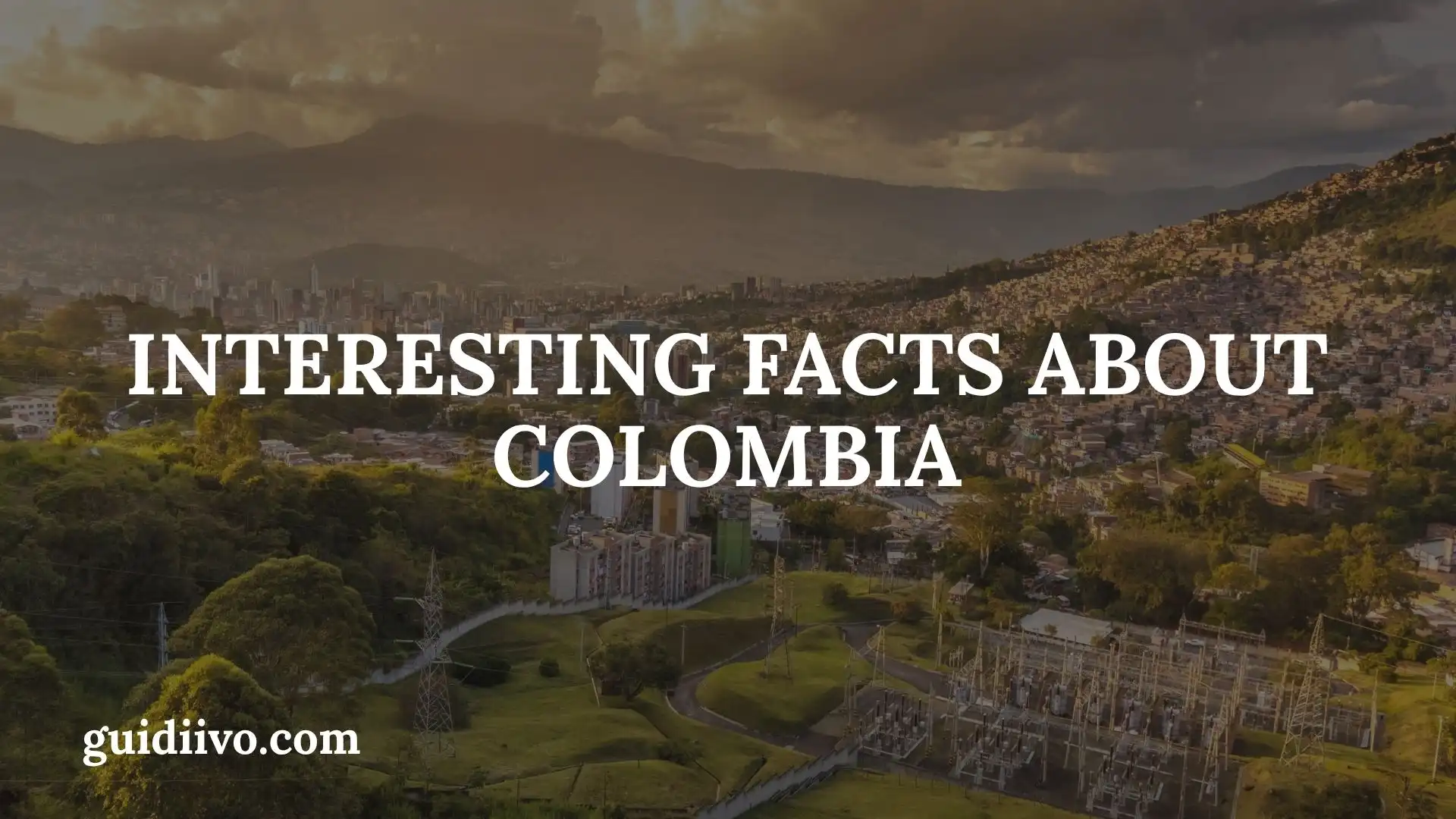
Colombia is a country where snow-covered mountains rise near tropical forests, ancient civilizations meet modern cities, and hundreds of rhythms shape everyday life. The most interesting facts about Colombia reveal far more than its famous coffee and colorful festivals.
Located at the meeting point of South and Central America, Colombia contains Caribbean beaches, Pacific rainforests, Andean valleys, open grasslands, deserts, and part of the Amazon. It is also one of Earth’s richest countries for plants, birds, languages, music, and cultural traditions.
This guide explores Colombia’s geography, biodiversity, Indigenous heritage, food, cities, national symbols, archaeological sites, and major historical milestones.
Quick Answer:Interesting Facts About Colombia
Colombia is a remarkably diverse South American country with coastlines on both the Caribbean Sea and Pacific Ocean. It is known for exceptional biodiversity, high-quality coffee, emeralds, orchids, wax palms, colorful festivals, Indigenous cultures, and energetic music. Its landscapes range from Amazon rainforest and tropical islands to Andean peaks, deserts, wetlands, and vast eastern plains.
Quick Facts About Colombia
| Topic | Quick Fact |
| Official name | Republic of Colombia |
| Capital | Bogotá |
| Location | Northwestern South America |
| Area | About 1.14 million square kilometers |
| Population | Approximately 53.4 million in 2025 |
| Official language | Spanish, with Indigenous and Creole languages recognized in their territories |
| Currency | Colombian peso |
| Government | Presidential republic |
| Independence | Declared July 20, 1810 |
| Highest point | Pico Cristóbal Colón and Pico Simón Bolívar, traditionally listed at about 5,700 meters |
| Major river | Magdalena River |
| National flower | Cattleya trianae orchid |
| National tree | Quindío wax palm |
| National bird | Andean condor |
| Famous products | Coffee, flowers, bananas, cacao, emeralds, and tropical fruits |
| Population fun fact | Colombia had an estimated 53,425,635 residents in 2025. |
1. Colombia Touches Two Great Bodies of Water
The Fact
Colombia is the only South American country with coastlines on both the Pacific Ocean and the Caribbean Sea. Its Caribbean shore includes historic cities, coral islands, mangroves, dry forests, and tropical beaches. Its Pacific coast is wetter, more forested, and less densely populated.
Why It Matters
Access to two coasts has shaped Colombia’s trade, food, settlement patterns, ecosystems, and cultural identity.
Did You Know?
The Caribbean and Pacific regions have noticeably different music, cuisine, architecture, weather, and wildlife.
Additional Context
Colombia also has maritime connections with several nearby Caribbean and Central American countries.
2. The Country Is Named After Christopher Columbus
The Fact
The name Colombia comes from Cristóbal Colón, the Spanish name for Christopher Columbus. The term gained political importance during the independence era, especially through the vision of revolutionary leader Francisco de Miranda.
Why It Matters
The name reflects the complicated history of European exploration, colonization, independence, and nation-building in the Americas.
Did You Know?
The modern Republic of Colombia is not identical to Gran Colombia, the larger 19th-century state associated with Simón Bolívar.
Additional Context
Gran Colombia once included areas belonging to present-day Colombia, Venezuela, Ecuador, and Panama.
3. Bogotá Is One of the World’s Highest Major Capitals
The Fact
Bogotá stands on a high plateau in the Eastern Cordillera of the Andes at roughly 2,600 meters, or about 8,500 feet, above sea level. Its elevation gives the city a cool climate despite its location near the equator.
Why It Matters
Elevation explains why Bogotá is rarely as hot as many visitors expect a tropical capital to be.
Did You Know?
New arrivals may notice shortness of breath during physical activity until they adjust to the thinner air.
Additional Context
The city’s temperature changes relatively little by season, although daily rain and sunshine patterns vary.
4. Colombia Is One of Earth’s Megadiverse Countries
The Fact
Colombia is recognized as one of the world’s megadiverse nations. Its remarkable biological richness comes from the meeting of the Andes, Amazon, Caribbean, Pacific, Orinoco plains, islands, wetlands, and tropical valleys.
Why It Matters
A wide range of elevations and climates allows countless species to live within a relatively compact area.
Did You Know?
Traveling a short distance can take you from dry forest to cloud forest or from tropical lowlands to cold alpine grassland.
Additional Context
Protecting this diversity is important for clean water, food systems, climate regulation, scientific research, and local livelihoods.
5. Colombia Is a Global Bird-Watching Powerhouse
The Fact
Colombia regularly ranks among the countries with the greatest number of recorded bird species. Hummingbirds, toucans, parrots, tanagers, condors, antpittas, and many endemic species occupy habitats ranging from coastal mangroves to high Andes.
Why It Matters
Bird diversity serves as an important sign of ecological richness and makes Colombia a leading destination for nature tourism.
Did You Know?
A birder can observe dramatically different species by changing elevation rather than traveling across an entire continent.
Additional Context
Habitat loss, illegal wildlife trade, and climate change still threaten many bird populations.
6. The Andes Divide Into Three Main Ranges in Colombia
The Fact
After entering Colombia from the south, the Andes divide into three principal branches: the Western, Central, and Eastern Cordilleras. Between them lie major valleys, rivers, farms, cities, and transportation corridors.
Why It Matters
These mountain ranges strongly influence where Colombians live and how regions communicate with one another.
Did You Know?
Bogotá lies in the Eastern Cordillera, while Medellín sits in the Aburrá Valley within the Central Andes.
Additional Context
The mountains help create Colombia’s many local climates, often described as thermal zones based on elevation.
7. One Mountain Range Rises Almost Directly From the Caribbean
The Fact
The Sierra Nevada de Santa Marta is an isolated mountain system beside Colombia’s Caribbean coast. Its tallest peaks rise from tropical lowlands to permanent cold at exceptional speed, creating one of the planet’s most dramatic elevation changes near an ocean.
Why It Matters
The range contains ecosystems from coral-influenced coastal zones to high mountain environments.
Did You Know?
UNESCO describes the Sierra Nevada de Santa Marta as the world’s highest coastal mountain formation.
Additional Context
It is also the ancestral homeland of the Arhuaco, Kankuamo, Kogui, and Wiwa peoples.
8. Colombia Contains Part of the Amazon Rainforest
The Fact
Southern Colombia forms part of the Amazon Basin. Departments such as Amazonas, Caquetá, Guainía, Guaviare, Putumayo, and Vaupés contain vast forests, rivers, Indigenous territories, and remote communities.
Why It Matters
The Colombian Amazon stores carbon, supports extraordinary wildlife, and preserves valuable Indigenous ecological knowledge.
Did You Know?
Leticia, the capital of Amazonas Department, sits near the borders of Brazil and Peru.
Additional Context
Rivers are essential transportation routes because many rainforest areas have few roads.
9. The Eastern Plains Form a Vast Grassland Region
The Fact
East of the Andes lie the Llanos, broad tropical plains connected to the Orinoco River system. Seasonal rains transform the landscape, flooding low areas and supporting abundant fish, reptiles, birds, and grazing animals.
Why It Matters
The Llanos are central to cattle ranching, energy production, rice farming, and llanero culture.
Did You Know?
Traditional llanero music, clothing, horsemanship, and work songs developed around life on open ranchland.
Additional Context
El Tuparro Biosphere Reserve protects rivers, savannas, gallery forests, and seasonally flooded environments in this region.
10. Colombia Has a Caribbean Desert
The Fact
La Guajira Peninsula in northern Colombia contains arid plains, rocky shores, salt flats, and striking sand dunes. The landscape contrasts sharply with the humid forests found elsewhere in the country.
Why It Matters
La Guajira demonstrates how geographically varied Colombia is, even within its Caribbean region.
Did You Know?
Some dunes descend toward the sea, creating scenes where desert sand appears to meet Caribbean water.
Additional Context
The peninsula is closely associated with the Wayuu people, whose communities extend across the Colombian-Venezuelan border.
11. The Quindío Wax Palm Can Grow Astonishingly Tall
The Fact
The Quindío wax palm, Ceroxylon quindiuense, is Colombia’s national tree. It has a slender trunk and may reach around 60 meters or more under favorable conditions, making it one of the world’s tallest palm species.
Why It Matters
The tree represents the unique high-altitude ecosystems of the Colombian Andes.
Did You Know?
Wax palms grow naturally at elevations where most people would not expect to find palm trees.
Additional Context
Colombia’s official country information identifies the wax palm as a national symbol and reports heights of up to about 70 meters.
12. Colombia’s National Flower Is an Orchid
The Fact
The Cattleya trianae orchid is Colombia’s national flower. It was named partly in honor of Colombian botanist José Jerónimo Triana and is admired for its large, delicate, often purple-and-white blooms.
Why It Matters
The flower represents Colombia’s exceptional orchid diversity and long tradition of botanical study.
Did You Know?
Colombia contains thousands of orchid species, including many adapted to narrow ecological zones.
Additional Context
Orchids often grow as epiphytes on trees without taking nutrients directly from their hosts.
13. The Andean Condor Symbolizes Freedom
The Fact
The Andean condor is Colombia’s national bird and appears above the national coat of arms. With broad wings and a powerful soaring ability, it has long symbolized freedom, strength, and the high Andes.
Why It Matters
The bird connects national identity with the landscapes and cultures of the Andean region.
Did You Know?
Condors use rising air currents to travel long distances while conserving energy.
Additional Context
Colombia officially recognizes the condor, orchid, and wax palm among its major natural symbols.
14. Colombia’s Flag Gives Half Its Space to Yellow
The Fact
The Colombian flag has three horizontal bands: yellow, blue, and red. Unlike many tricolor flags, the yellow section occupies the upper half, while blue and red each fill one quarter.
Why It Matters
Its unusual proportions make the flag immediately recognizable.
Did You Know?
A common interpretation connects yellow with wealth and sunlight, blue with seas and rivers, and red with sacrifice during the struggle for independence.
Additional Context
The basic color combination also appears in the flags of Ecuador and Venezuela because of their shared history in Gran Colombia.
15. Colombian Coffee Is Closely Linked to Mountain Geography
The Fact
Much of Colombia’s coffee grows on steep Andean slopes where altitude, rainfall, temperature, volcanic soils, and hand harvesting support high-quality Arabica beans. Different regions produce cups with distinct aromas, acidity, sweetness, and body.
Why It Matters
Coffee is not simply a crop in Colombia. It has shaped rural communities, transportation, exports, family farms, and national identity.
Did You Know?
Because harvest seasons vary by latitude and altitude, coffee is collected somewhere in Colombia during much of the year.
Additional Context
Many farms remain small and depend heavily on skilled hand-picking.
16. The Coffee Cultural Landscape Is a World Heritage Site
The Fact
UNESCO’s Coffee Cultural Landscape of Colombia includes six connected areas and 18 urban settlements. It recognizes the relationship between mountain farming, architecture, community cooperation, local traditions, and coffee production.
Why It Matters
The designation protects a living landscape rather than a single monument.
Did You Know?
Farmers adapted coffee cultivation to difficult, steep terrain through generations of practical knowledge.
Additional Context
UNESCO describes the area as a continuing productive landscape where natural, economic, and cultural features work together.
17. Colombia Is Famous for High-Quality Emeralds
The Fact
Colombia has long been associated with valuable emerald deposits, especially in areas such as Muzo, Chivor, and Coscuez. Colombian emeralds are prized for their color, clarity, and geological characteristics.
Why It Matters
Emerald mining has influenced trade, local economies, folklore, jewelry, and conflict.
Did You Know?
Emeralds form when rare geological conditions bring beryllium into contact with chromium or vanadium, which creates their green color.
Additional Context
Not every Colombian emerald has the same quality, and responsible sourcing remains an important concern for buyers.
18. El Dorado Was Originally Connected to a Person, Not a City
The Fact
The European legend of El Dorado grew partly from stories about a Muisca ruler who covered himself with gold dust and made offerings in a sacred lake. Over time, outsiders transformed the story into tales of a hidden golden city or kingdom.
Why It Matters
The change shows how Indigenous rituals were misunderstood and exaggerated by European treasure seekers.
Did You Know?
Lake Guatavita, near Bogotá, is strongly linked to the legend.
Additional Context
For the Muisca, gold carried spiritual and ceremonial meaning beyond its financial value.
19. The Muisca Built a Sophisticated Highland Society

The Fact
Before Spanish conquest, the Muisca lived across the high plateaus of present-day Cundinamarca and Boyacá. They developed organized political communities, agriculture, textile production, salt mining, trade networks, and remarkable metalwork.
Why It Matters
Their history challenges the misconception that Colombia’s complex societies began with European settlement.
Did You Know?
Salt from the Bogotá highlands was a valuable trading resource.
Additional Context
Many place names, archaeological objects, customs, and legends in central Colombia preserve elements of Muisca heritage.
20. San Agustín Contains Mysterious Monumental Statues
The Fact
San Agustín Archaeological Park in southern Colombia contains carved stone figures, burial sites, ceremonial structures, and earthworks created by a pre-Hispanic society. Many statues combine human and animal features.
Why It Matters
The site offers rare evidence of religious and funerary traditions that developed long before Spanish arrival.
Did You Know?
Researchers still debate the precise meanings of many sculptures.
Additional Context
The uncertainty is part of the site’s importance because it shows how much remains to be learned about ancient Colombian cultures.
21. Tierradentro Is Known for Underground Tombs
The Fact
The National Archaeological Park of Tierradentro protects elaborate underground burial chambers called hypogea. Some contain painted geometric patterns, pillars, stairways, and designs that resemble the interiors of houses.
Why It Matters
The tombs reveal sophisticated beliefs about death, community, status, and the afterlife.
Did You Know?
Visitors reach several chambers by descending narrow staircases cut into the earth.
Additional Context
San Agustín and Tierradentro are both included among Colombia’s UNESCO-listed cultural sites.
22. Chiribiquete Preserves Ancient Rock Art
The Fact
Chiribiquete National Park protects enormous table-top rock formations, rainforest habitats, and thousands of painted images on rock shelters. Some depict animals, hunters, rituals, and human figures.
Why It Matters
The park combines archaeological importance with exceptional environmental value.
Did You Know?
Chiribiquete is often called the “Maloca of the Jaguar,” reflecting the jaguar’s cultural and spiritual importance.
Additional Context
Its remoteness has helped preserve ecosystems, although deforestation pressures in surrounding areas remain serious.
23. Cartagena Was One of Spain’s Most Important American Ports
The Fact
Founded in 1533, Cartagena de Indias became a major Caribbean port within the Spanish Empire. Powerful walls, forts, bastions, and castles defended the city against rival empires and pirates.
Why It Matters
Cartagena played a major role in colonial trade, warfare, slavery, religion, and regional government.
Did You Know?
The Castillo San Felipe de Barajas is one of the city’s most impressive defensive structures.
Additional Context
The historic port, fortresses, and monuments form a UNESCO World Heritage property.
24. San Basilio de Palenque Grew From Resistance to Slavery
The Fact
San Basilio de Palenque, near Cartagena, traces its history to communities established by Africans who escaped enslavement. It preserved distinctive music, social traditions, oral history, healing practices, and the Palenquero language.
Why It Matters
The town represents resistance, survival, cultural creativity, and the lasting African foundations of Colombian society.
Did You Know?
Palenquero combines a Spanish-based vocabulary with important African linguistic structures and influences.
Additional Context
UNESCO recognizes the cultural space of San Basilio de Palenque as intangible cultural heritage.
25. Mompox Developed Along the Magdalena River
The Fact
Santa Cruz de Mompox was founded in 1540 beside the Magdalena River. It became an important center for trade, religion, craftwork, and colonial administration, with streets and buildings shaped by river life.
Why It Matters
Its preserved urban form provides a vivid example of a Spanish colonial river settlement.
Did You Know?
The main street historically served partly as a barrier against flooding.
Additional Context
UNESCO notes that many historic buildings still serve their original functions, helping preserve the town’s unity and character.
26. Colombia Has Extraordinary Regional Music
The Fact
Colombian music includes cumbia, vallenato, currulao, bambuco, joropo, champeta, porro, salsa, and many local styles. These traditions blend Indigenous, African, European, rural, urban, coastal, and river-based influences.
Why It Matters
Music helps communities preserve stories, work traditions, religious practices, memories, and regional identity.
Did You Know?
The instruments change by region, from accordions and drums to marimbas, harps, flutes, and scrapers.
Additional Context
Several Colombian musical and festive traditions appear on UNESCO heritage lists.
27. Vallenato Began as Storytelling Music
The Fact
Traditional vallenato developed in northern Colombia and the Greater Magdalena region. Traveling musicians used songs to share news, personal stories, local events, humor, love, and social commentary.
Why It Matters
Before modern communication systems, music could function as an oral newspaper connecting distant communities.
Did You Know?
The best-known vallenato format combines accordion, caja drum, and guacharaca scraper.
Additional Context
UNESCO describes vallenato as a fusion of regional cattle-herding songs, chants, poetry, and several cultural influences.
28. Barranquilla Hosts One of the World’s Great Carnivals
The Fact
The Carnival of Barranquilla fills the Caribbean city with parades, costumes, masks, dance groups, satire, drumming, and theatrical characters. Indigenous, African, and European traditions all contribute to the celebration.
Why It Matters
The carnival preserves regional memory while allowing traditions to change and remain relevant.
Did You Know?
Famous characters include Marimonda, Congo dancers, and the dramatic figure of Joselito Carnaval.
Additional Context
UNESCO added the Carnival of Barranquilla to its Representative List of the Intangible Cultural Heritage of Humanity.
29. The Black and White Carnival Celebrates Cultural Mixture
The Fact
Pasto’s Carnaval de Negros y Blancos takes place around the beginning of January. Participants enjoy music, elaborate floats, artistic displays, playful face painting, and public celebrations involving many parts of the community.
Why It Matters
The festival expresses regional identity and reflects centuries of cultural interaction.
Did You Know?
Its name comes from historic celebration days associated with symbolic racial role reversal and shared festivity.
Additional Context
Modern organizers increasingly emphasize respect, creativity, cultural heritage, and safer materials.
30. Colombian Spanish Has Many Regional Accents
The Fact
There is no single Colombian accent. Speech varies across Bogotá, the Caribbean coast, Antioquia, the Pacific, Santander, the Llanos, Nariño, Valle del Cauca, and other regions.
Why It Matters
Pronunciation, rhythm, vocabulary, and forms of address reveal local history and identity.
Did You Know?
In some areas, speakers frequently use usted even with close friends or family, while others prefer tú or vos.
Additional Context
Spanish is dominant nationally, but Colombia is also home to Indigenous, Creole, and Romani languages.
31. Colombia’s Food Changes Dramatically by Region
The Fact
Colombian cuisine is highly regional. Coastal meals may feature coconut rice and fish, Andean cooking often includes potatoes and soups, while the plains are known for grilled meats. Tropical fruits appear in juices, desserts, sauces, and snacks.
Why It Matters
The food reflects geography, altitude, climate, agriculture, migration, and cultural exchange.
Did You Know?
A dish considered ordinary in one department may be unfamiliar in another.
Additional Context
Popular foods include arepas, empanadas, tamales, ajiaco, sancocho, bandeja paisa, pandebono, and lechona.
32. Colombia Grows an Astonishing Variety of Fruits
The Fact
Markets in Colombia may offer lulo, guanábana, granadilla, curuba, feijoa, uchuva, mamoncillo, guava, tree tomato, passion fruit, and many kinds of mango and banana.
Why It Matters
Different elevations allow farmers to grow temperate and tropical produce within the same country.
Did You Know?
Lulo has an orange exterior, green interior, and sharp citrus-like flavor often used in juice.
Additional Context
Visitors commonly encounter fruits they have never seen in supermarkets at home.
33. Medellín Is Known for Its Mountain Setting and Urban Transformation
The Fact
Medellín lies in the narrow Aburrá Valley, surrounded by steep green mountains. During recent decades, transportation projects, libraries, parks, schools, and public spaces have reshaped many parts of the city.
Why It Matters
Medellín is frequently studied for using transit and urban design to connect hillside communities.
Did You Know?
Its cable-car lines operate as part of the public transportation network rather than solely as tourist attractions.
Additional Context
The city still faces inequality and security challenges, so its transformation should not be reduced to a simple success story.
34. The Magdalena River Helped Unite the Country
The Fact
The Magdalena River flows north between Andean ranges toward the Caribbean. For centuries, it served as one of Colombia’s most important routes for people, goods, news, crops, and cultural exchange.
Why It Matters
Before modern highways and aviation, the river linked the interior highlands with Caribbean ports.
Did You Know?
Many towns, songs, legends, wetlands, and fishing traditions are tied to the Magdalena system.
Additional Context
Pollution, habitat change, sedimentation, and declining fish stocks now create major environmental concerns.
35. Colombia’s Greatest Strength May Be Its Regional Diversity
The Fact
Colombia is not culturally or geographically uniform. A resident of Bogotá, Cartagena, Cali, Medellín, Leticia, Pasto, San Andrés, or a remote Indigenous territory may experience a very different climate, diet, accent, landscape, and local tradition.
Why It Matters
Understanding Colombia requires looking beyond a few famous stereotypes.
Did You Know?
The country is often divided into six broad natural regions: Andean, Caribbean, Pacific, Orinoquía, Amazon, and Insular.
Additional Context
Their connections and contrasts make Colombia one of Latin America’s most complex and fascinating nations.
Timeline of Colombian History
| Date | Milestone |
| Before 1500 | Muisca, Tairona, Zenú, Quimbaya, San Agustín, Tierradentro, and many other societies flourish |
| 1499 | Spanish exploration reaches parts of the northern coast |
| 1533 | Cartagena de Indias is founded |
| 1538 | Spanish forces establish the settlement that becomes Bogotá |
| July 20, 1810 | Political uprising in Bogotá begins a major phase of independence |
| 1819 | Bolívar’s forces secure a decisive victory at the Battle of Boyacá |
| 1819–1831 | Colombia forms part of the state commonly called Gran Colombia |
| 1886 | A new constitution establishes the Republic of Colombia under its modern name |
| 1903 | Panama separates from Colombia |
| 1991 | Colombia adopts a new constitution recognizing cultural and ethnic diversity |
| 2016 | The government and FARC sign a final peace agreement |
| Present | Colombia continues addressing inequality, environmental pressure, displacement, security, and peacebuilding |
Colombia Statistics
| Statistic | Figure |
| Population, 2025 estimate | 53,425,635 |
| Population, 2024 | 52,886,363 |
| Surface area | About 1,140,619 square kilometers |
| Life expectancy at birth, 2024 | About 78 years |
| World Heritage properties | 9 inscribed properties |
| UNESCO Coffee Cultural Landscape components | 6 areas and 18 settlements |
| Los Katíos National Park area | About 72,000 hectares |
| Capital elevation | Approximately 2,600 meters |
| Quindío wax palm height | Up to roughly 60–70 meters |
Population, area, and life-expectancy figures reflect recent World Bank reporting. Heritage and protected-area figures come from UNESCO.
Colombia Myth vs Fact
| Myth | Fact |
| Colombia is entirely tropical and hot | Elevation creates climates ranging from hot lowlands to cold mountain zones |
| Coffee grows everywhere | Commercial coffee thrives mainly in suitable mountain regions |
| Bogotá has tropical beach weather | Bogotá is cool because it sits about 2,600 meters above sea level |
| El Dorado was certainly a golden city | The legend probably expanded from Indigenous ceremonies involving gold offerings |
| Colombian culture is the same nationwide | Accents, foods, music, landscapes, and customs vary greatly by region |
| Colombia is only an Andean country | It also includes Amazon rainforest, Caribbean and Pacific coasts, plains, deserts, and islands |
| Spanish is the country’s only language | Indigenous, Creole, and Romani languages are also spoken |
| Colombia’s history began with Spain | Complex societies existed for thousands of years before European arrival |
| All Colombian coffee tastes alike | Flavor changes according to origin, altitude, processing, soil, and harvest conditions |
| The country can be understood through its past conflicts | Colombia also has deep artistic, ecological, scientific, agricultural, and cultural significance |
Common Misconceptions About Colombia

Colombia and Columbia Are Not Interchangeable
Colombia is the South American country. Columbia appears in names such as British Columbia, Columbia University, and the District of Columbia. The country’s spelling uses an o after the first C.
The Seasons Do Not Follow a Simple Summer-Winter Pattern
Because Colombia lies near the equator, temperature is influenced more strongly by altitude than by the four seasons familiar in temperate countries. Rainfall patterns, however, vary by region and time of year.
Colombia Is Not Culturally Homogeneous
Paisa, costeño, rolo, caleño, llanero, Pacific Afro-Colombian, island, Indigenous, and other identities have distinct histories. Treating them as one uniform culture erases meaningful differences.
Modern Colombia Is More Than Its Conflict History
Armed conflict has had devastating consequences and should not be ignored. However, defining the entire country through violence overlooks its people, scholarship, conservation work, entrepreneurship, art, literature, cuisine, and community leadership.
Why Colombia Matters Today
Colombia matters because its forests, mountains, wetlands, reefs, and rivers support globally important biodiversity. Environmental decisions made there influence wildlife migration, freshwater supplies, carbon storage, food security, and the health of the Amazon and tropical Andes.
The country also offers important lessons about multicultural citizenship, urban development, Indigenous rights, rural inequality, peacebuilding, and the protection of living heritage. Colombia’s location connects South America with the Caribbean and Central America, giving it strategic ecological and economic importance.
Its growing cities, young population, agricultural resources, music, literature, scientific institutions, and creative industries ensure that Colombia continues to shape regional and global culture.
Related Places and Discoveries
Understanding Colombia becomes easier when its regions are explored together:
- The Andes explain the country’s elevation zones, coffee farming, major cities, and isolated valleys.
- The Amazon Basin connects Colombia environmentally with Brazil, Peru, Ecuador, Venezuela, Bolivia, Guyana, and Suriname.
- The Caribbean world links Cartagena, Barranquilla, La Guajira, San Andrés, and coastal Afro-Colombian traditions with wider Caribbean history.
- The Pacific Chocó is known for heavy rainfall, dense forests, marine life, and strong Afro-Colombian and Indigenous cultures.
- Gran Colombia explains historical links among Colombia, Venezuela, Ecuador, and Panama.
- Pre-Hispanic archaeology connects San Agustín, Tierradentro, Muisca metalwork, Tairona settlements, and Chiribiquete rock art.
Expert Insights: How to Understand Colombia More Accurately
The best way to understand Colombia is to think vertically as well as horizontally. On a map, two locations may appear close, yet a steep mountain range can separate them through climate, transport, agriculture, and culture.
Altitude often predicts everyday life. Hot lowlands produce different crops and building styles from cool highland plateaus. Cloud forests support species that cannot survive in coastal deserts. A meal, accent, musical instrument, or item of clothing may therefore reveal its geographic origin.
It is equally important to distinguish national symbols from regional realities. Coffee, orchids, condors, and wax palms represent Colombia, but no single object captures the full country. Colombia’s defining characteristic is the coexistence of many environments and identities within one nation.
Frequently Asked Questions
What is Colombia best known for?
Colombia is known for high-quality coffee, emeralds, biodiversity, music, orchids, tropical fruits, historic Cartagena, Andean cities, Caribbean beaches, and the Amazon rainforest. It is also recognized for regional dances and festivals, including cumbia, vallenato, the Barranquilla Carnival, and the Black and White Carnival.
What are five interesting facts about Colombia?
Colombia borders both the Caribbean Sea and Pacific Ocean, contains part of the Amazon, has exceptional bird diversity, grows towering wax palms, and includes the high coastal Sierra Nevada de Santa Marta. It is also one of the world’s most geographically and culturally diverse countries.
Is Colombia in Central America or South America?
Colombia is in northwestern South America. It shares a land border with Panama, which links South and Central America. Colombia also borders Venezuela, Brazil, Peru, and Ecuador and has coastlines on the Caribbean Sea and Pacific Ocean.
What language do people speak in Colombia?
Spanish is spoken by most Colombians and is the country’s official national language. Numerous Indigenous languages are also spoken, along with Creole languages such as Palenquero and San Andrés-Providencia Creole. These languages reflect Colombia’s ethnic, historical, and cultural diversity.
Why is Colombia so biodiverse?
Colombia’s biodiversity results from its tropical location, two coastlines, three Andean mountain ranges, Amazon rainforest, Pacific forests, Caribbean habitats, eastern grasslands, islands, rivers, and wide range of elevations. These features create many separate ecosystems where species can evolve and specialize.
Is Colombia the world’s largest coffee producer?
No. Colombia is one of the world’s leading coffee-producing countries, but it is not normally the largest by total volume. Its international reputation comes mainly from high-quality washed Arabica coffee grown across varied mountain regions.
What is Colombia’s national animal?
Colombia does not have one universally designated “national animal” covering every category. The Andean condor is its national bird and a major national symbol. The country also identifies the Quindío wax palm as its national tree and Cattleya trianae as its national flower.
What is the capital of Colombia?
Bogotá is Colombia’s capital and largest urban center. It lies on an Andean plateau at approximately 2,600 meters above sea level. The city is the national center of government, finance, higher education, museums, media, and many cultural institutions.
What is the meaning of Colombia’s flag?
The Colombian flag has yellow, blue, and red horizontal bands. Common interpretations associate yellow with wealth, sunlight, and sovereignty; blue with skies, rivers, and seas; and red with strength, love, and blood sacrificed during the struggle for independence.
Is Colombia safe to visit?
Safety conditions vary by city, neighborhood, rural area, and travel route and can change over time. Many travelers visit Colombia without serious problems, but careful planning remains essential. Visitors should consult current official travel guidance, use reputable transportation, protect valuables, and seek reliable local advice.
Key Takeaways
- Colombia is the only South American country bordering both the Caribbean Sea and Pacific Ocean.
- Its landscapes include Andes, Amazon rainforest, tropical plains, deserts, wetlands, islands, and coastal forests.
- Colombia is one of the world’s most biologically diverse nations.
- Bogotá’s high elevation gives it a cool climate despite its tropical latitude.
- The Quindío wax palm, Andean condor, and Cattleya trianae orchid are important national symbols.
- Coffee, emeralds, flowers, fruit, music, archaeology, and festivals shape Colombia’s global identity.
- Indigenous and Afro-Colombian cultures are essential to the nation’s history.
- Colombia’s food, accents, music, and traditions vary widely by region.
- UNESCO recognizes several Colombian natural, cultural, and living heritage traditions.
- The country cannot be understood through one landscape, city, product, or historical period.
Conclusion
The most interesting facts about Colombia show a nation shaped by dramatic geography and extraordinary human creativity. Its mountain ranges divide climates and cultures, while rivers and coastlines connect communities to the wider world.
Colombia’s coffee farms, ancient tombs, rainforests, musical traditions, festivals, languages, and historic cities each reveal a different part of its identity. What makes the country truly remarkable is not one famous product or place, but the remarkable variety found across its regions.