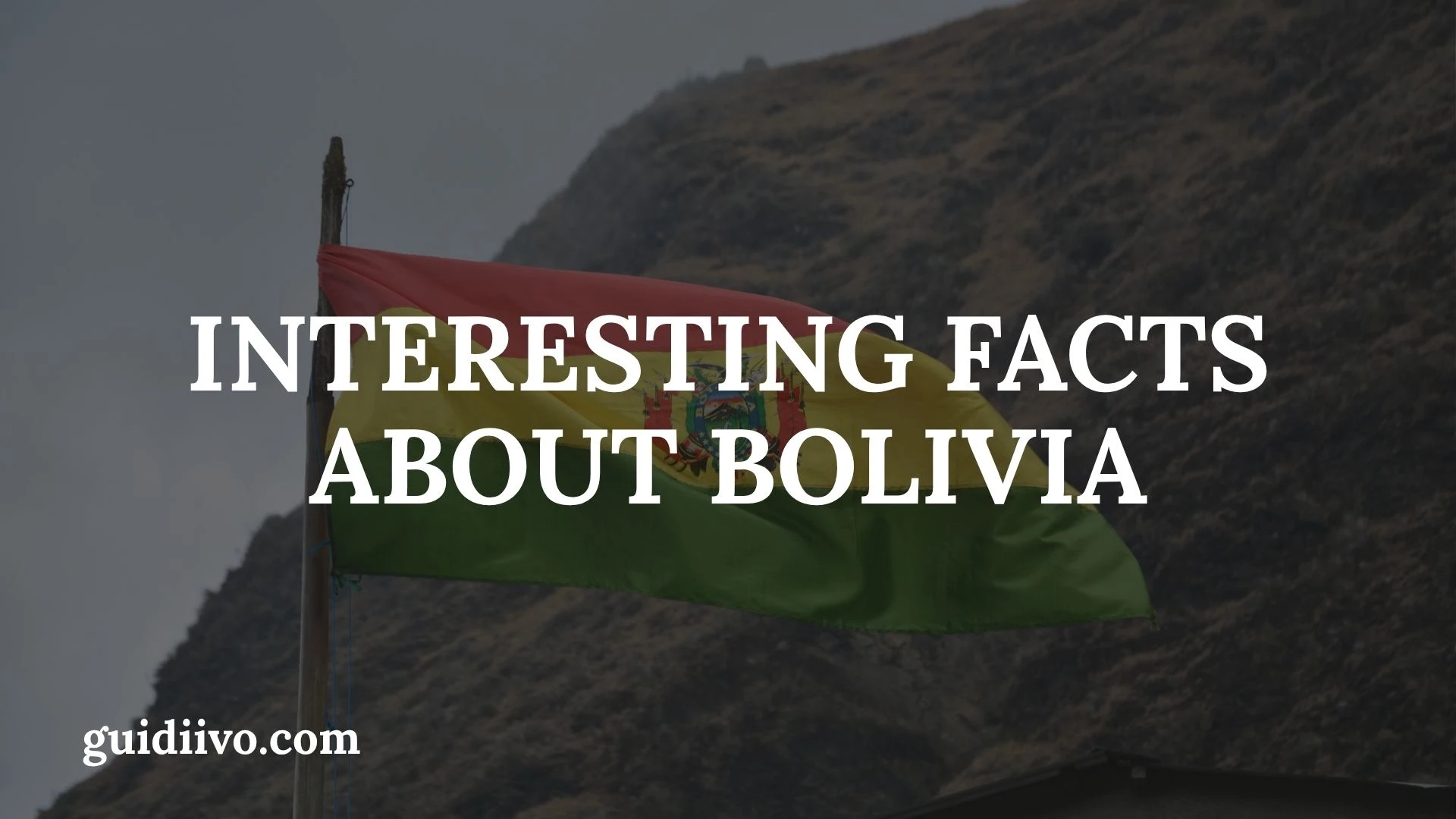
Bolivia is one of South America’s most surprising countries. It has two capital cities, a seemingly endless salt flat, ancient civilizations, snow-covered mountains, tropical forests, and one of the world’s highest major urban areas.
These interesting facts about Bolivia reveal far more than record-breaking landmarks. They explain how geography has shaped the country’s food, traditions, politics, languages, economy, and identity. From Indigenous engineering at Tiwanaku to modern cable cars above La Paz, Bolivia connects ancient knowledge with present-day innovation.
Quick Answer:Interesting Facts About Bolivia
Bolivia is a landlocked South American country known for the Salar de Uyuni, Lake Titicaca, the Andes, Amazonian forests, and its strong Indigenous heritage. Its constitutional capital is Sucre, while La Paz is the seat of government. Bolivia recognizes Spanish and 36 Indigenous languages, reflecting its identity as the Plurinational State of Bolivia.
Bolivia Quick Facts
| Topic | Information |
| Official name | Plurinational State of Bolivia |
| Location | Central South America |
| Constitutional capital | Sucre |
| Seat of government | La Paz |
| Largest city | Santa Cruz de la Sierra |
| Area | About 1,098,580 square kilometers |
| Population | More than 11 million people |
| Borders | Argentina, Brazil, Chile, Paraguay, and Peru |
| Official languages | Spanish and 36 Indigenous languages |
| Currency | Boliviano |
| Independence | August 6, 1825 |
| Highest mountain | Sajama, about 6,542 meters |
| Famous natural landmark | Salar de Uyuni |
| National identity | Plurinational, multicultural, and multilingual |
Bolivia covers approximately 1.1 million square kilometers and shares borders with five countries. Indigenous peoples make up a significant part of its population and cultural identity.
1. Bolivia Has a Capital and a Seat of Government
Bolivia is often described as having two capitals, although their legal roles are different. Sucre is the constitutional capital and the home of the country’s highest court. La Paz contains the executive and legislative branches and functions as the national seat of government.
Why it matters: This arrangement reflects a political compromise that followed regional struggles during the late 1800s.
Did you know? Many maps label La Paz as the capital because most government activity happens there, but Bolivia’s constitution recognizes Sucre as the capital.
2. La Paz Is One of the World’s Highest Seats of Government
Central La Paz stands roughly 3,650 meters, or nearly 12,000 feet, above sea level. Neighborhoods stretch even higher along the surrounding mountains and toward the neighboring city of El Alto.
Why it matters: The altitude affects transportation, construction, weather, cooking, and even human breathing. Visitors often need time to adjust because the air contains less oxygen than at sea level.
Did you know? Water boils at a lower temperature in La Paz, so foods such as beans and potatoes may take longer to cook.
3. Bolivia Contains the World’s Largest Salt Flat
Salar de Uyuni covers more than 10,000 square kilometers in southwestern Bolivia. It formed from the remains of ancient lakes that evaporated over thousands of years, leaving enormous layers of salt and mineral-rich brine.
Why it matters: The salt flat supports tourism, local salt production, scientific research, and interest in lithium development.
Did you know? During the rainy season, a thin layer of water transforms the surface into a giant natural mirror that appears to merge the ground with the sky.
4. Salar de Uyuni Helps Calibrate Satellites
The salt flat is not only beautiful. Its huge, bright, flat, and relatively uniform surface makes it useful for testing and calibrating instruments carried by Earth-observing satellites.
Why it matters: Accurate satellite measurements help scientists study sea levels, ice sheets, land changes, and the global climate.
Did you know? The elevation across much of Salar de Uyuni changes very little. Its remarkable flatness allows researchers to compare satellite readings with a dependable natural reference surface.
5. Bolivia Holds Major Lithium Resources
Lithium-rich brines lie beneath Salar de Uyuni and other salt flats in the Andean region. Lithium is used in rechargeable batteries for phones, computers, energy-storage systems, and electric vehicles.
Why it matters: These resources could influence Bolivia’s economy and the global transition toward cleaner energy. However, extracting lithium from complex brines requires technology, water management, investment, and environmental safeguards.
Did you know? Bolivia has long sought to develop lithium while retaining greater national control over production and profits.
6. Bolivia Lost Its Pacific Coast
Bolivia was not always landlocked. It lost its coastal territory to Chile during and after the War of the Pacific, fought from 1879 to 1884.
Why it matters: The loss still influences Bolivia’s politics, national identity, trade policies, and relationship with Chile. Access to the sea remains an emotionally powerful issue.
Did you know? Bolivia maintains a navy even without an ocean coastline. Its naval forces operate on rivers and lakes and symbolize the country’s continuing maritime aspirations.
7. Lake Titicaca Is Shared With Peru
Lake Titicaca lies on the border between Bolivia and Peru at an elevation of about 3,812 meters. It is widely described as the world’s highest large lake navigable by commercial vessels.
Why it matters: The lake supplies food, water, transportation, and income to surrounding communities. It also holds deep spiritual importance in Andean traditions.
Did you know? In Inca mythology, the creator god Viracocha and the founders of the Inca dynasty were associated with the lake and its sacred islands.
8. The Island of the Sun Is Sacred in Andean Tradition
Isla del Sol, or the Island of the Sun, rises from the Bolivian side of Lake Titicaca. Archaeological remains, stone terraces, pathways, and ceremonial sites cover the island.
Why it matters: The island shows how religion, farming, political authority, and landscape were closely connected in the Andes.
Did you know? Inca tradition identified Isla del Sol as a birthplace of the sun or an ancestral place connected with Manco Cápac and Mama Ocllo, legendary founders of the Inca ruling line.
9. Tiwanaku Predates the Inca Empire
Tiwanaku was the center of a powerful pre-Columbian civilization near Lake Titicaca. Its influence expanded across parts of present-day Bolivia, Peru, Chile, and Argentina centuries before the rise of the Inca Empire.
Why it matters: Tiwanaku demonstrates that sophisticated states, religious systems, trade networks, and engineering traditions developed early in the high Andes.
Did you know? The site’s monumental structures include the Akapana platform, Kalasasaya temple, stone monoliths, and the famous Gateway of the Sun. UNESCO added Tiwanaku to its World Heritage List in 2000.
10. Ancient Farmers Engineered Fields to Survive Frost
Communities around Tiwanaku developed raised agricultural fields separated by water channels. These systems improved drainage, stored moisture, and helped protect crops against severe nighttime temperature changes.
Why it matters: The technique allowed farmers to grow food in a difficult high-altitude environment where frost can destroy ordinary fields.
Did you know? Water in the channels absorbed heat during the day and released some of it at night. Modern researchers have studied these fields as examples of climate-smart Indigenous engineering.
11. Bolivia Recognizes 37 Official Languages
Bolivia’s constitution recognizes Spanish and 36 Indigenous languages as official languages. They include Aymara, Quechua, Guaraní, Chiquitano, Mojeño-Trinitario, Tacana, and many others.
Why it matters: Official recognition gives linguistic diversity a place in education, public administration, cultural policy, and national identity.
Did you know? The 2009 Constitution requires regional governments to use Spanish and at least one Indigenous language appropriate to their territory. Language recognition does not guarantee survival, however, because several languages have very small speaker populations.
12. Bolivia Defines Itself as a Plurinational State
The country’s official name is the Plurinational State of Bolivia. This term recognizes that Bolivia contains numerous Indigenous nations and cultural communities rather than a single uniform national tradition.
Why it matters: The concept influences language rights, political representation, local autonomy, education, and recognition of Indigenous legal practices.
Did you know? Bolivia adopted its present constitution in 2009. It replaced the former constitutional description of the Republic of Bolivia and formally emphasized the country’s cultural and political diversity.
13. The Wiphala Is an Official National Symbol
The Wiphala is a square emblem made from a seven-by-seven grid of bright colors arranged diagonally. It is strongly associated with Indigenous peoples of the Andes, particularly Aymara communities.
Why it matters: Its official status represents the inclusion of Indigenous identity within the Bolivian state.
Did you know? The Wiphala appears beside Bolivia’s red, yellow, and green tricolor at government buildings and public ceremonies. Its colors are often interpreted as representing community, nature, knowledge, energy, and relationships among Andean peoples.
14. Bolivia Includes Andes, Valleys, Plains, and Rainforest
Bolivia is often imagined as a cold mountain country, but much of its territory lies east of the Andes. The country includes tropical forests, savannas, wetlands, fertile valleys, salt deserts, high plateaus, and snow-covered peaks.
Why it matters: This diversity supports distinct ecosystems, farming systems, wildlife, foods, and regional cultures.
Did you know? A traveler can move from the freezing Altiplano to humid Amazonian lowlands within the same country, experiencing dramatic changes in elevation and climate.
15. Much of Bolivia Belongs to the Amazon Basin
Northern and northeastern Bolivia form part of the Amazon watershed. Rivers flow through forests and wetlands toward Brazil and eventually into the Amazon River system.
Why it matters: Bolivia’s forests store carbon, regulate water cycles, support Indigenous communities, and provide habitats for thousands of species.
Did you know? The Bolivian Amazon includes both dense rainforest and seasonally flooded savannas. It is ecologically different from the high, dry landscapes most often shown in tourism photographs.
16. Madidi Is One of Earth’s Most Biodiverse Protected Areas
Madidi National Park stretches from high Andean mountains into lowland Amazonian forests. Its extraordinary range of elevation creates many climates and habitats within one protected landscape.
Why it matters: Madidi protects jaguars, spectacled bears, giant otters, monkeys, macaws, and thousands of plant species. It also overlaps with territories used by Indigenous communities.
Did you know? Scientists continue documenting species in the park. Its biodiversity shows how mountain slopes can create tightly connected ecological zones over relatively short horizontal distances.
17. Bolivia Has Rare Pink River Dolphins
The Bolivian river dolphin, locally called the bufeo, lives in freshwater rivers of the Amazon basin. It is related to other South American river dolphins but is geographically separated by rapids and waterfalls.
Why it matters: River dolphins serve as indicators of aquatic ecosystem health. Pollution, fishing gear, habitat disruption, and changing water flows can threaten them.
Did you know? Bolivia declared the river dolphin a natural heritage species, helping draw attention to the need for freshwater conservation.
18. The Country Has Flamingos in a High-Altitude Desert
Three flamingo species can be seen in Bolivia’s southwestern lagoons: the Chilean, Andean, and James’s flamingos. They feed in shallow, mineral-rich waters surrounded by volcanoes and desert.
Why it matters: These wetlands are crucial breeding and feeding areas in an otherwise harsh environment.
Did you know? Some lagoons appear red, green, white, or blue because of minerals, sediments, algae, microorganisms, and changing light. The birds’ pink coloring comes partly from pigments in their food.
19. Bolivia’s National Animal Is a Camelid
The llama is commonly recognized as Bolivia’s national animal. Llamas belong to the South American camelid family alongside alpacas, vicuñas, and guanacos.
Why it matters: For centuries, Andean communities have relied on llamas for transport, meat, fiber, fuel from dried dung, and ceremonial life.
Did you know? Llamas are well adapted to high elevations. Their blood and respiratory systems help them function in oxygen-poor environments where many other domesticated animals struggle.
20. The Vicuña Produces Exceptionally Fine Fiber
Vicuñas are wild relatives of llamas that live in high Andean grasslands. Their soft fiber is among the finest and most valuable animal fibers in the world.
Why it matters: Community-based shearing programs can provide income while keeping the animals alive and allowing them to return to the wild.
Did you know? Vicuñas were once severely threatened by uncontrolled hunting. International protection and regulated management helped populations recover in several Andean countries, including Bolivia.
21. Potatoes Have Deep Roots in the Bolivian Andes
The central Andes are one of the great historic centers of potato domestication and diversity. Bolivian farmers cultivate potatoes in many colors, shapes, textures, and sizes.
Why it matters: This diversity protects food security. Different varieties resist different combinations of cold, drought, pests, diseases, and soil conditions.
Did you know? Traditional farmers often plant several potato varieties in one field. That strategy reduces the risk that a single frost, disease, or weather event will destroy the entire harvest.
22. Freeze-Dried Food Existed in Bolivia Long Before Refrigerators
Andean communities developed chuño by exposing potatoes to freezing nighttime temperatures, strong daytime sun, and repeated pressing or drying.
Why it matters: The process removes moisture and allows potatoes to remain edible for years. It helped families survive failed harvests, droughts, conflict, and long journeys.
Did you know? Chuño is one of the world’s oldest freeze-dried foods. It remains an important ingredient in soups, stews, and traditional dishes across Bolivia’s highlands.
23. Quinoa Thrives Where Many Crops Cannot
Quinoa grows well in cold, dry, salty, high-altitude environments. Bolivia’s southern Altiplano is especially known for royal quinoa, valued for its relatively large grains.
Why it matters: The crop provides protein, fiber, minerals, and income in regions with limited farming options.
Did you know? Quinoa is not a true cereal grass like wheat or rice. Botanically, it is a pseudocereal related to plants such as spinach and amaranth.
24. Potosí Was Once a Global Silver Center

The discovery of rich silver deposits at Cerro Rico in 1545 transformed Potosí into a major colonial mining city. Silver extracted there entered trade networks linking the Americas, Europe, and Asia.
Why it matters: Potosí helped finance the Spanish Empire, but its wealth depended on dangerous labor systems imposed on Indigenous workers and others.
Did you know? The mountain’s name means “Rich Hill.” Its history represents both extraordinary global influence and the human cost of colonial resource extraction.
25. Sucre Is Known as Bolivia’s White City
Sucre is famous for whitewashed colonial buildings, tiled roofs, churches, courtyards, and a mild mountain climate. Its historic center is recognized as a UNESCO World Heritage Site.
Why it matters: The city played a central role in Bolivia’s independence and continues to serve as the constitutional and judicial capital.
Did you know? Sucre was previously known by several names, including Chuquisaca and La Plata. Its present name honors independence leader Antonio José de Sucre.
26. Bolivia Was Named After Simón Bolívar
After independence in 1825, the new country took its name from Simón Bolívar, one of the most influential leaders in South America’s wars against Spanish rule.
Why it matters: The name connected the new republic with a broader movement for continental independence and political transformation.
Did you know? “Bolivia” was derived from Bolívar’s surname, while Sucre was named after Antonio José de Sucre, another major independence leader who became Bolivia’s first constitutional president.
27. Bolivia’s Independence Struggle Lasted About 16 Years
Revolutionary uprisings began in Chuquisaca and La Paz in 1809. Fighting continued through years of royalist resistance, local guerrilla campaigns, regional revolutions, and changing military alliances. Independence was proclaimed on August 6, 1825.
Why it matters: Bolivia’s independence was not a single battle. It developed through sustained resistance involving local leaders, rural communities, Indigenous fighters, and continental armies.
Did you know? The 1809 uprisings are often remembered among the earliest revolutionary movements in Spanish South America.
28. Oruro Hosts a World-Famous Carnival
The Carnival of Oruro blends Indigenous Andean beliefs with Catholic traditions introduced during Spanish colonial rule. Its elaborate dances include the Diablada, featuring dramatic devil masks and embroidered costumes.
Why it matters: The celebration preserves music, craftsmanship, religious devotion, community organization, and historical memory.
Did you know? Thousands of dancers and musicians take part in a long ceremonial procession toward the Sanctuary of the Virgin of Socavón. UNESCO recognizes the carnival as important intangible cultural heritage.
29. Cholita Fashion Communicates Identity and Status
In Bolivia, the term “cholita” often refers to Indigenous or mestiza women known for wearing layered pollera skirts, shawls, jewelry, and distinctive bowler hats.
Why it matters: Clothing that was once targeted by prejudice has become a visible expression of cultural confidence, economic success, and political presence.
Did you know? The angle and placement of a bowler hat can vary by local fashion and personal style. Cholita designers, athletes, entrepreneurs, and public figures have expanded the image far beyond old stereotypes.
30. Cholita Wrestling Mixes Sport and Social Theater
Cholita wrestling features women performing dramatic wrestling matches, often in traditional skirts and braided hairstyles. The shows combine athletic skill, comedy, storytelling, and audience participation.
Why it matters: The performances challenge narrow ideas about Indigenous women, femininity, and public entertainment.
Did you know? Wrestlers may leap from ropes and perform carefully practiced moves while keeping their polleras on. Although designed as entertainment, the sport has become a symbol of confidence and cultural visibility.
31. La Paz Uses Cable Cars as Public Transportation
Mi Teleférico connects La Paz and El Alto through an extensive urban cable-car network. Gondolas travel above steep neighborhoods that would be difficult to connect efficiently using ordinary roads.
Why it matters: The system reduces some travel times, improves access, and offers a practical response to extreme elevation changes.
Did you know? Cable cars are not merely a tourist attraction. Residents use them for commuting to work, school, markets, and government offices.
32. El Alto Grew Into a Major City on a High Plateau
El Alto sits above La Paz at more than 4,000 meters in many areas. Once a collection of settlements near transportation routes, it developed into one of Bolivia’s largest urban centers.
Why it matters: El Alto has become an influential center of Aymara culture, commerce, migration, social movements, and national politics.
Did you know? The city’s flat plateau contrasts sharply with La Paz, which fills a deep valley below it.
33. El Alto Is Famous for Neo-Andean Architecture
Colorful buildings sometimes called cholets combine commercial halls, family homes, event spaces, mirrored glass, geometric patterns, and designs inspired by Andean imagery.
Why it matters: These buildings express the growing wealth and confidence of Indigenous and mestizo entrepreneurs. They also challenge the idea that prestigious architecture must copy European styles.
Did you know? The word “cholet” blends “cholo,” a complex regional identity term, with “chalet.” Many owners use the buildings for businesses, celebrations, and rental income.
34. The Yungas Road Became Famous for Its Danger
The old road between La Paz and the Yungas descends from cold mountain heights toward warm subtropical valleys. It has narrow sections, steep cliffs, waterfalls, fog, and dramatic elevation changes.
Why it matters: Before safer routes were built, it served as an important connection between the highlands and agricultural regions.
Did you know? Its reputation as the “Death Road” turned it into a mountain-biking destination. Tourism now depends on safety rules, skilled guides, maintained equipment, and careful driving.
35. Bolivia’s Diversity Is Its Most Important Fact
Bolivia cannot be understood through one landscape, language, ethnic group, or historic period. Aymara, Quechua, Guaraní, Chiquitano, mestizo, Afro-Bolivian, European-descended, and many other communities contribute to national life.
Why it matters: This diversity shapes politics, music, food, festivals, farming, law, and regional identity.
Did you know? Around 38 percent of Bolivia’s population self-identifies as Indigenous, giving the country one of Latin America’s largest Indigenous population shares.
Bolivia History Timeline
| Date | Milestone |
| c. 500–1000 CE | Tiwanaku becomes a major Andean political and ceremonial center |
| 1400s | The Inca Empire expands into much of present-day Bolivia |
| 1530s | Spanish conquest reaches the region |
| 1545 | Large-scale silver exploitation begins at Cerro Rico in Potosí |
| 1809 | Revolutionary uprisings occur in Chuquisaca and La Paz |
| 1825 | Bolivia declares independence on August 6 |
| 1879–1884 | Bolivia loses its Pacific coast during the War of the Pacific |
| 1932–1935 | Bolivia fights Paraguay in the Chaco War |
| 1952 | A national revolution introduces major political and land reforms |
| 1982 | Civilian democratic government is restored |
| 2006 | Evo Morales becomes Bolivia’s first Indigenous president |
| 2009 | A new constitution establishes the Plurinational State of Bolivia |
Bolivia Statistics
| Measure | Approximate Figure |
| Total area | 1,098,580 square kilometers |
| Number of bordering countries | 5 |
| Departments | 9 |
| Official languages | 37 |
| Highest point | Sajama, 6,542 meters |
| Salar de Uyuni area | More than 10,000 square kilometers |
| Lake Titicaca elevation | About 3,812 meters |
| La Paz central elevation | About 3,650 meters |
| Independence year | 1825 |
| Indigenous share of population | About 38% by self-identification |
Area, border, and population figures can vary slightly among institutions because of rounding, census updates, and estimation methods.
Myth vs. Fact About Bolivia
| Myth | Fact |
| La Paz is Bolivia’s only capital | Sucre is the constitutional capital; La Paz is the seat of government |
| Bolivia is entirely mountainous | Large areas contain tropical forest, plains, wetlands, and savannas |
| Everyone speaks Spanish | Spanish and 36 Indigenous languages have official recognition |
| Salar de Uyuni is always covered in water | The mirror effect usually appears when seasonal rain leaves a thin water layer |
| Bolivia has no navy | Bolivia maintains naval forces on lakes and rivers |
| Tiwanaku was built by the Inca | Tiwanaku flourished centuries before the Inca Empire |
| Quinoa is a grain like wheat | It is a pseudocereal from a broadleaf flowering plant |
| Bolivia has no connection to the sea | It historically had a Pacific coast and still seeks meaningful maritime access |
Common Misconceptions About Bolivia
Bolivia Is Not Just an Andean Country
The Andes dominate many photographs and travel stories, but Bolivia extends far into the Amazon basin and subtropical lowlands. Santa Cruz, Beni, and Pando differ greatly from the Altiplano in climate, food, vegetation, settlement, and economic activity.
“Two Capitals” Does Not Mean Two Identical Governments
Sucre and La Paz do not duplicate every function. Sucre is the constitutional capital and judicial center. La Paz houses the presidency, legislature, ministries, and most national administrative institutions.
Indigenous Culture Is Not Frozen in the Past
Bolivia’s Indigenous communities are not museum exhibits. They include urban professionals, farmers, artists, politicians, business owners, academics, activists, and technology users. Traditions change while remaining meaningful.
Salar de Uyuni Is More Than a Tourist Backdrop
The salt flat is an ecosystem, economic resource, scientific reference site, cultural landscape, and transportation route. Tourism is only one part of its importance.
Why Bolivia Matters Today
Bolivia sits at the center of several global conversations. Its lithium resources matter to battery supply chains and the energy transition. Its Amazonian forests matter to biodiversity and climate stability. Its glaciers and high-altitude wetlands reveal the effects of environmental change.
The country also offers important lessons about linguistic rights, Indigenous representation, community agriculture, resource sovereignty, and urban transportation. Bolivia shows how ancient knowledge can remain relevant to modern problems, especially in farming, water management, architecture, and environmental adaptation.
Related Places and Discoveries
Bolivia’s history and geography connect naturally with the wider Andes. Tiwanaku influenced societies in present-day Peru and Chile. Lake Titicaca links Bolivian and Peruvian traditions. The Inca later incorporated much of the region into Tawantinsuyu, its vast imperial system.
The Gran Chaco connects southeastern Bolivia with Paraguay and Argentina, while Amazonian rivers connect the north with Brazil. Salar de Uyuni belongs to the broader high-Andean “lithium triangle,” which also includes salt-flat regions in Argentina and Chile.
Expert Insights: How to Understand Bolivia More Accurately
The most useful way to study Bolivia is by looking at relationships rather than isolated records. Altitude affects agriculture, clothing, settlement, architecture, and transportation. Colonial mining connects Potosí to global economic history. Language policy connects constitutional law to cultural survival.
Travelers should also avoid treating Bolivia as culturally uniform. Customs in La Paz, Sucre, Santa Cruz, Potosí, Tarija, and the Amazonian departments can differ greatly. Understanding regional variation produces a more respectful and accurate picture of the country.
Frequently Asked Questions About Bolivia
What is Bolivia best known for?
Bolivia is best known for Salar de Uyuni, Lake Titicaca, the Andes, La Paz, Indigenous cultures, colorful festivals, and the historic mining city of Potosí. It also has Amazonian rainforest, rare wildlife, major lithium resources, and remarkable archaeological sites such as Tiwanaku.
What is the capital of Bolivia?
Sucre is Bolivia’s constitutional capital and the seat of the judiciary. La Paz is the seat of government, containing the presidency, legislature, and most ministries. This division explains why both cities are commonly described as capitals, although they perform different legal and administrative roles.
Why is Bolivia called a plurinational state?
Bolivia uses the term “plurinational” to recognize that many Indigenous nations and cultural communities exist within the country. The 2009 Constitution strengthened recognition of Indigenous languages, political participation, local autonomy, community institutions, and cultural rights.
Is Bolivia completely landlocked?
Bolivia is currently landlocked and has no sovereign Pacific or Atlantic coastline. It lost its coastal territory to Chile during the War of the Pacific. However, it uses rivers, neighboring ports, and international agreements for trade and maintains naval forces on inland waterways.
What languages are spoken in Bolivia?
Spanish is widely spoken, while Quechua, Aymara, Guaraní, and many other Indigenous languages remain important. The constitution recognizes Spanish and 36 Indigenous languages as official, although speaker numbers and everyday usage vary greatly between regions.
Is Salar de Uyuni always a mirror?
No. The mirror effect occurs when seasonal rain leaves a shallow layer of water across the salt. During dry periods, the surface usually appears white and solid, often forming natural hexagonal patterns as the salt crust dries and contracts.
Is La Paz the highest capital in the world?
La Paz is commonly called the world’s highest national capital, but the wording requires care because Sucre is Bolivia’s constitutional capital. La Paz is more precisely one of the world’s highest major cities and the highest national seat of government.
What food is Bolivia famous for?
Popular Bolivian foods include salteñas, anticuchos, sopa de maní, silpancho, pique macho, sajta, api, buñuelos, chuño, quinoa dishes, and many regional soups. Cuisine changes greatly between the cold highlands, temperate valleys, tropical lowlands, and Amazonian areas.
What ancient civilization developed in Bolivia?
Tiwanaku was one of the most influential civilizations centered in present-day Bolivia. It developed monumental architecture, religious traditions, long-distance connections, and advanced high-altitude farming systems before declining centuries before the Inca reached its greatest power.
Is Bolivia safe for travelers?
Conditions vary by location, season, transportation method, and current events. Visitors should prepare for altitude, road conditions, demonstrations, weather changes, and remote travel. Using reputable guides, checking official travel information, carrying suitable insurance, and allowing time to acclimatize can reduce common risks.
Key Takeaways
- Bolivia’s constitutional capital is Sucre, while La Paz is the seat of government.
- Salar de Uyuni is the world’s largest salt flat and a valuable scientific reference surface.
- Bolivia recognizes Spanish and 36 Indigenous languages.
- The country includes Andes, valleys, Amazonian forests, wetlands, plains, and deserts.
- Tiwanaku flourished long before the Inca Empire.
- Bolivia became independent in 1825 and later lost its Pacific coast.
- Indigenous knowledge has shaped agriculture, food preservation, textiles, and environmental adaptation.
- Lithium, biodiversity, water, and cultural rights make Bolivia globally important today.
Conclusion
The most interesting facts about Bolivia reveal a country defined by extraordinary contrasts. Ancient ceremonial centers stand near modern cities. Snowy peaks rise above tropical forests. Traditional clothing appears beside innovative architecture and urban cable cars.
Bolivia’s greatest strength is not a single landmark or world record. It is the relationship between its landscapes, peoples, languages, histories, and living traditions. Learning about those connections turns Bolivia from a place on the map into one of South America’s most compelling cultural and geographic stories.

I am Theodore Blake, a writer driven by curiosity and a lifelong love of discovery. I enjoy exploring surprising facts about animals, science, history, and the natural world. Through my writing, I aim to make knowledge simple, enjoyable, and memorable while inspiring readers to see familiar subjects from new perspectives.
Books
1. The Curious World: Extraordinary Facts Explained
A fascinating collection of unusual facts about nature, science, history, and everyday life, written to entertain curious readers.
2. Hidden Wonders: Stories Behind Amazing Facts
This book explores surprising discoveries and little-known stories that reveal how extraordinary our world truly is.